Monthly Archives

Tháng 3 2026

Automating Nail Salon Operations: A Guide for Owners

Streamlining Daily Workflows with Nail Salon Operations Automation

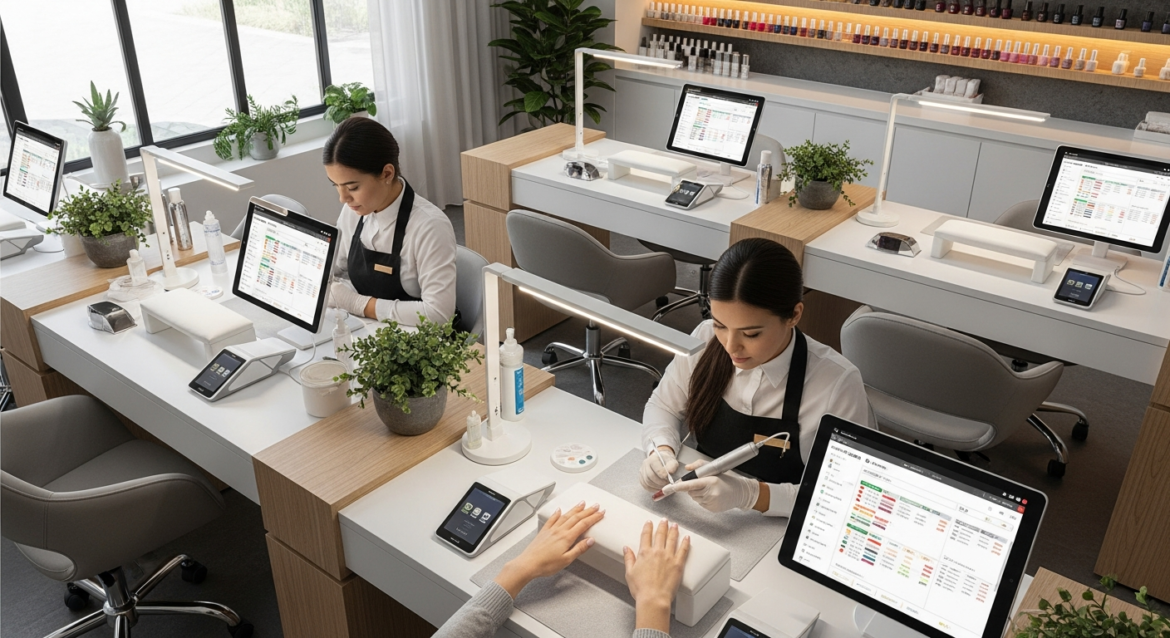
Nail salon operations automation is the process of using digital systems to standardize daily workflows, staff scheduling, and payroll calculations. By implementing automated SOPs, salon owners reduce manual errors and ensure consistent service delivery, allowing the business to run efficiently without constant hands-on management or verbal instructions for repetitive tasks.

Standardizing Daily Nail Salon Workflows

Nail salon operations automation begins with digitizing the opening and closing routines. Instead of relying on memory, technicians follow digital checklists that trigger reminders for station preparation and sanitation protocols.

Automated systems can track when a pedicure tub has been disinfected or when a manicure station is ready for the next client. This ensures every staff member maintains the same high standard of cleanliness and organization.

By removing the guesswork from daily tasks, owners ensure that the salon remains compliant with state board regulations. Digital logs provide an unchangeable record of completed operational tasks for future reference.

Automating Staff Scheduling and Shift Coordination

Managing shifts for multiple nail technicians requires precision to prevent overstaffing or coverage gaps. Nail salon operations automation tools allow owners to set recurring schedules based on historical peak hours.

Automated shift coordination enables technicians to view their hours and request swaps through a centralized system. This reduces the time owners spend communicating changes via text or paper calendars.

Systems can also send automated notifications to staff regarding their upcoming shifts. This direct communication minimizes late arrivals and ensures the salon is always ready to receive scheduled appointments.

Improving Shift Transitions

When shifts change, automation helps hand over pending tasks between technicians. Digital notes regarding supply levels or station maintenance ensure the incoming team is fully prepared.

Standardized digital handovers prevent the loss of important operational information during busy transition periods. This maintains a calm environment for both the staff and the clients.

Simplifying Payroll and Tip Processing

Calculating pay for nail technicians often involves complex variables like hourly rates and commission splits. Automation calculates these totals instantly based on recorded service data and time clock entries.

Digital systems also automate the distribution and tracking of tips. This transparency reduces disputes and ensures that every technician is compensated accurately for their specific nail services.

By automating these financial calculations, salon owners save hours of manual data entry each week. This system-based approach eliminates the math errors commonly found in hand-written ledgers.

Reducing Operational Errors Through Automated SOPs

Standard Operating Procedures (SOPs) are the backbone of a successful salon. Automation turns these procedures into interactive guides that technicians follow for every service, from acrylic sets to gel removals.

When a process is automated, the system prompts the technician to confirm specific steps, such as checking polish inventory or verifying client preferences. This reduces the likelihood of service inconsistencies.

Automated SOPs ensure that every client receives the same quality of care, regardless of which technician performs the service. This focus on systems over individual performance builds a more reliable business model.

Inventory and Supply Automation

Operational automation also extends to managing the professional products used at each station. Systems can track the usage of lacquers, monomers, and files based on the services performed each day.

Automated alerts notify the owner when back-bar supplies reach a specific threshold. This prevents the salon from running out of essential items during peak business hours.
0 comments
0 FacebookTwitterPinterestEmail

Nail Salon Financial Automation: Tracking Profit and Growth

Nail Salon Financial Automation: Tracking Profit and Growth

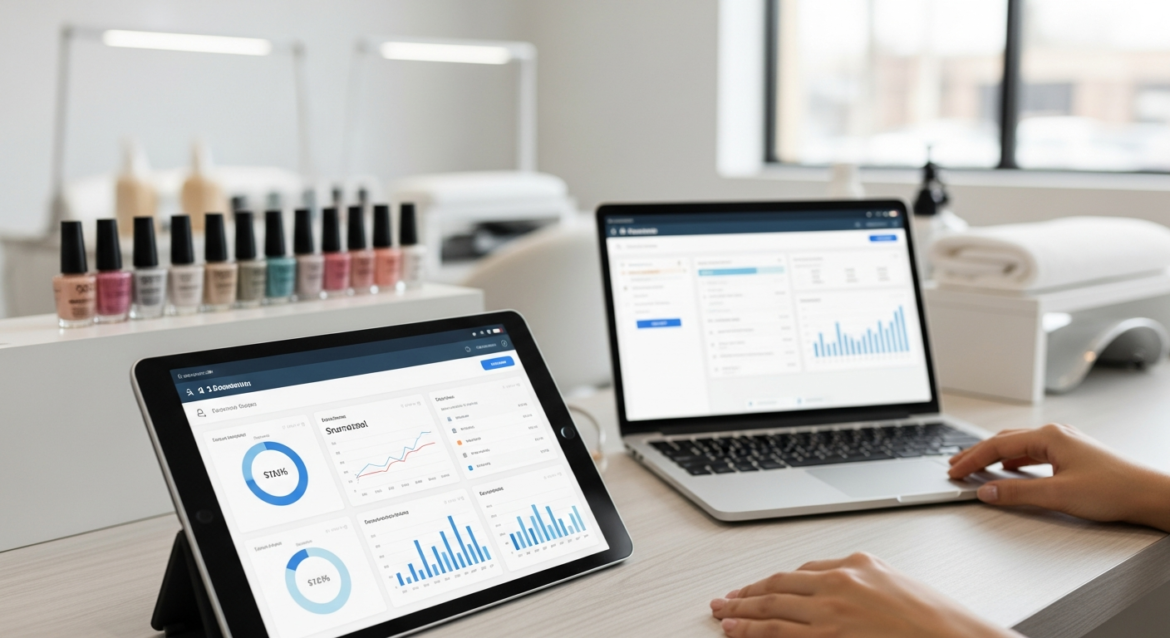
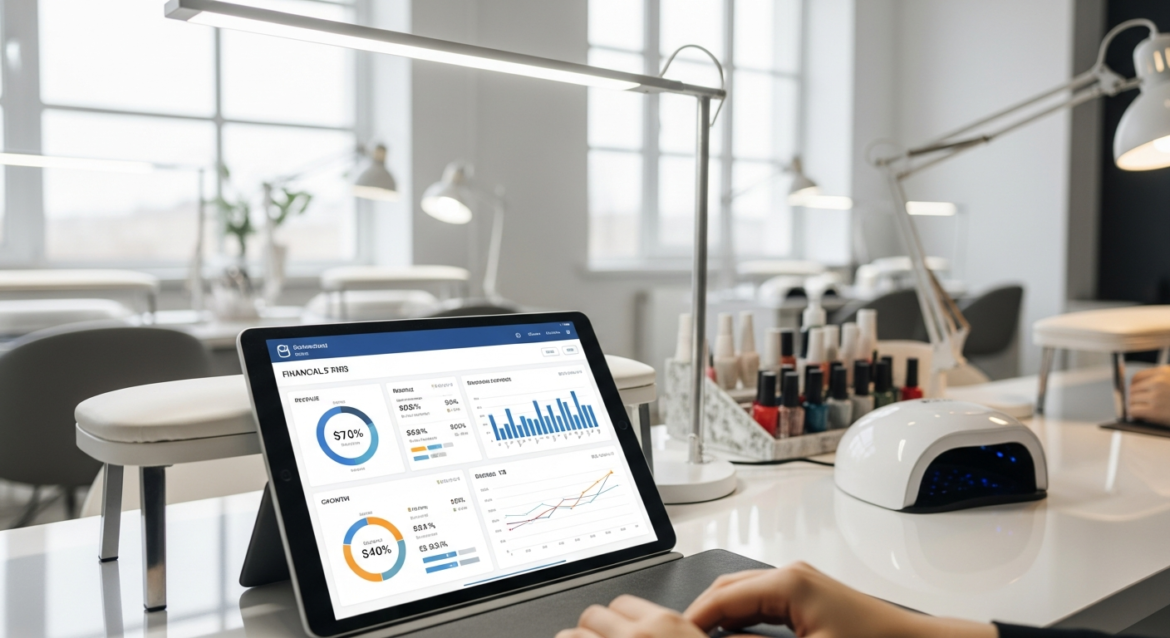
Nail salon financial automation uses digital tools to automatically record service sales, technician payouts, and business expenses. This system replaces manual ledger books and spreadsheets, giving U.S. salon owners instant access to their daily profit and cash flow data while reducing the time spent on administrative paperwork and manual math.

Automating Your Daily Revenue Tracking

For most nail salons, revenue tracking is the most time-consuming daily task.
Automation captures every manicure, pedicure, and add-on service the moment it is paid.
This ensures that cash, card, and digital payments are recorded accurately without manual entry.

Automated systems also handle the math for technician commission splits.
Instead of calculating percentages by hand at the end of the day, the system does it instantly.
This reduces errors and builds trust between the salon owner and the service providers.

By automating revenue, owners can see exactly which hours of the day are most profitable.
You can identify slow periods and busy rushes without guessing or being present at the front desk.
Real-time revenue data helps you manage your shop floor and staffing levels more effectively.

Gaining Clear Visibility Into Salon Expenses

Running a nail salon involves many small, recurring costs that are hard to track manually.
Automated expense tracking connects your business spending directly to a central dashboard.
This includes everything from rent and utilities to backbar supplies like polish and monomer.

Seeing your costs in real-time prevents “bank balance accounting” mistakes.
Many owners only look at their bank account to see if they are making money.
Automation shows you your true profit after all supplies and labor costs are subtracted.

Consistent expense tracking helps you spot when supply costs are rising too fast.
If you are spending more on acrylics or gels than usual, the data will alert you.
This visibility allows you to adjust your pricing or inventory habits before profits drop.

Essential Performance Indicators for Salon Owners

Performance data helps you understand if your salon is actually healthy or just busy.
Automation tracks Key Performance Indicators (KPIs) that tell the story of your business.
You no longer need to be a math expert to understand your shop’s health.

  • Average Ticket Price: The average amount each customer spends per visit.
  • Client Retention: The percentage of customers who return for another service.
  • Technician Productivity: How much revenue each chair generates per hour.
  • Service Mix: Which services (like gel X or dip powder) are being booked most often.

Focusing on these numbers helps you make better decisions about your service menu.
If your average ticket is low, you might focus on training staff to offer more add-ons.
If retention is low, you can investigate the quality of the customer experience.

The Power of Automated Financial Reporting

Automated reporting turns raw data into simple summaries that are easy to read.
Instead of spending Sunday nights with a calculator, you receive a weekly performance report.
These reports highlight wins and areas that need your attention as the owner.

Weekly and monthly summaries allow you to compare your performance over time.
You can see if this June was more profitable than last June with one click.
This historical data is vital for understanding the seasonal nature of the nail industry.

Ultimately, financial automation provides the clarity needed to run a professional business.
It moves the owner from a “worker” role into a “manager” role through better data.
With clear numbers, you can lead your team and grow your salon with total confidence.

0 comments
0 FacebookTwitterPinterestEmail

Financial Automation for Nail Salon Owners

How Nail Salon Financial Automation Simplifies Your Business

Nail salon financial automation is the use of digital systems to automatically record and organize daily revenue, service costs, and technician payouts. By syncing point-of-sale data with tracking tools, salon owners gain real-time visibility into their cash flow and profitability without manual data entry or complex accounting knowledge.

Automating Daily Revenue Tracking

Most salon owners spend hours at the end of the week adding up paper receipts or manual logs.
Financial automation connects your booking system directly to your money tracking tools.

This means every manicure, pedicure, and polish change is recorded the moment the client pays.
You no longer have to guess how much money came in or worry about math errors.

Automation ensures your daily sales totals are always accurate and up to date.

Gaining Visibility into Salon Expenses

Running a salon involves constant costs like rent, back-bar supplies, and technician commissions.
Automation helps you see exactly where your money is going without digging through folders of bills.

By automating expense tracking, you can categorize spending on nail lacquers, acrylics, and cleaning supplies.
This shows you which costs are rising and where you might be overspending on inventory.

Clear expense visibility helps you protect your profit margins every single month.

Simple Performance Metrics for Every Owner

You do not need an accounting degree to understand if your salon is performing well.
Automated systems can track key performance indicators (KPIs) that matter for local service businesses.

  • Average Ticket Price: The average amount each client spends per visit.
  • Rebooking Rate: How many clients book their next fill or gel change before leaving.
  • Technician Productivity: How much revenue each chair generates during a shift.

These metrics allow you to make decisions based on facts rather than feelings.

The Benefit of Automated Financial Reporting

Instead of staring at a blank spreadsheet, automation provides you with simple weekly summaries.
These reports highlight your total income, total costs, and what is left over as profit.

Having this information at your fingertips reduces the stress of running a small business.
You can see if you have enough cash for upcoming rent or if you can afford new chairs.

Automated reporting gives you the control and confidence to manage your salon effectively.

0 comments
0 FacebookTwitterPinterestEmail

Nail Salon Booking Automation: Streamlining Daily Services

Nail Salon Booking Automation for Better Service Flow

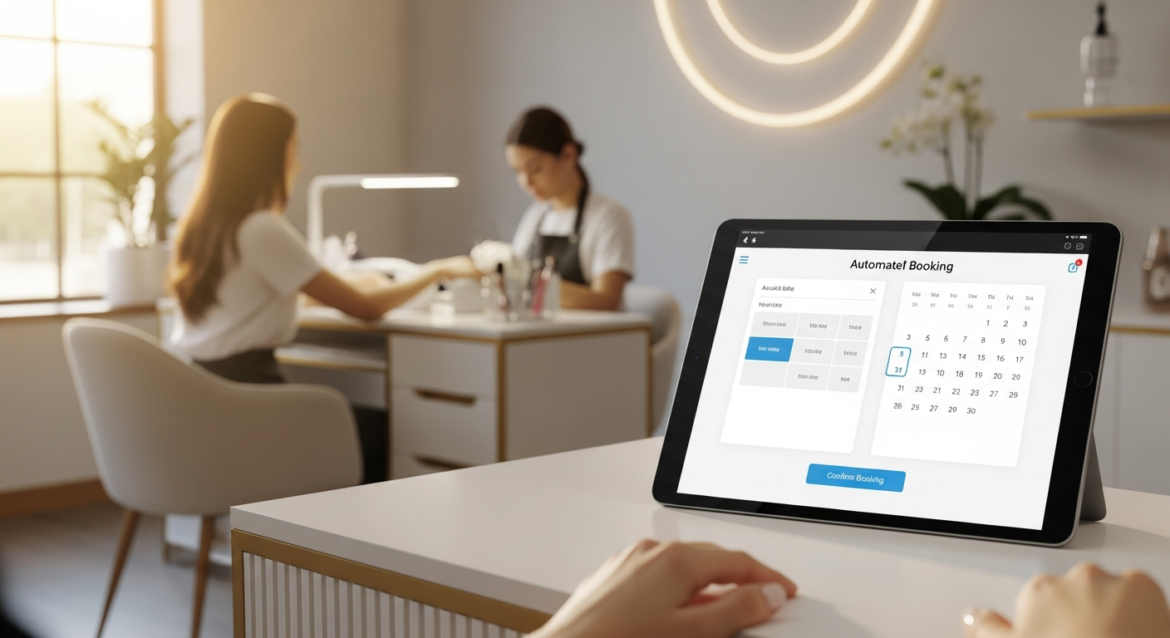
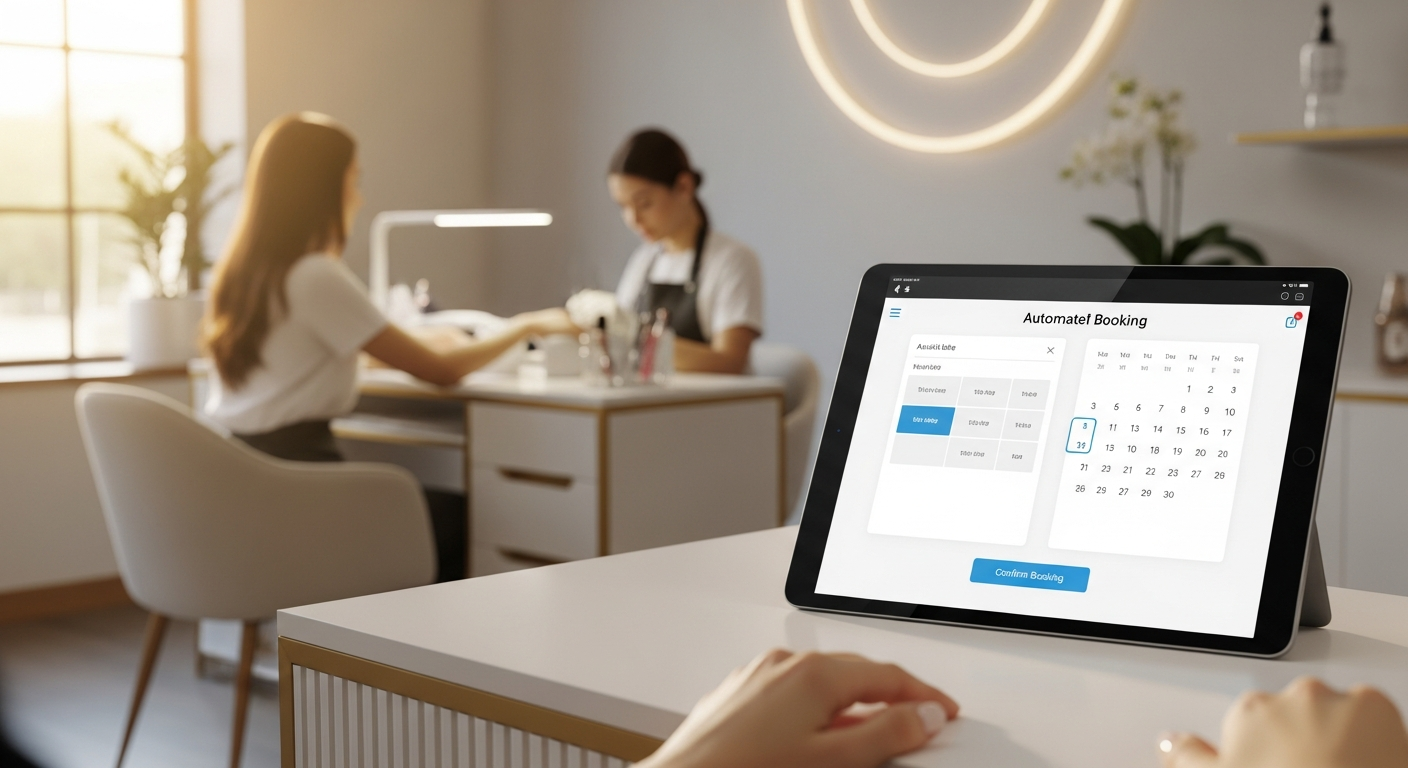
Nail salon booking automation is a digital system that manages appointment scheduling, confirmations, and reminders without manual entry. This technology streamlines the booking process, reduces missed appointments through automated notifications, and ensures that nail technicians can maintain a steady service flow while focusing entirely on providing high-quality nail care to their clients.

Improving Service Reliability with Online Booking

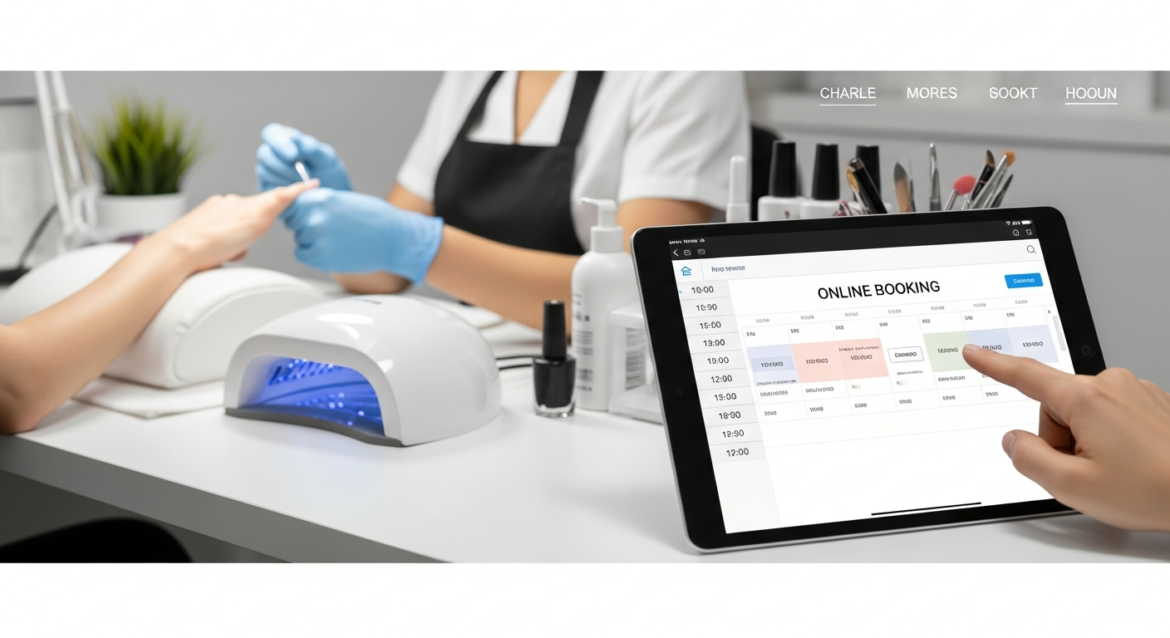
Traditional phone-based booking often leads to double-bookings or missed calls during busy hours. Nail salon booking automation allows clients to view real-time availability and secure their preferred time slot instantly.

By moving to an automated system, the nail salon ensures that the technician’s calendar is always accurate. This eliminates the stress of manual scheduling and allows the front desk to focus on in-person client care.

Online portals also allow clients to book services 24/7, even when the nail salon is closed. This flexibility increases the total number of bookings and ensures the salon remains competitive in the local market.

Reducing No-Shows through Automated Reminders

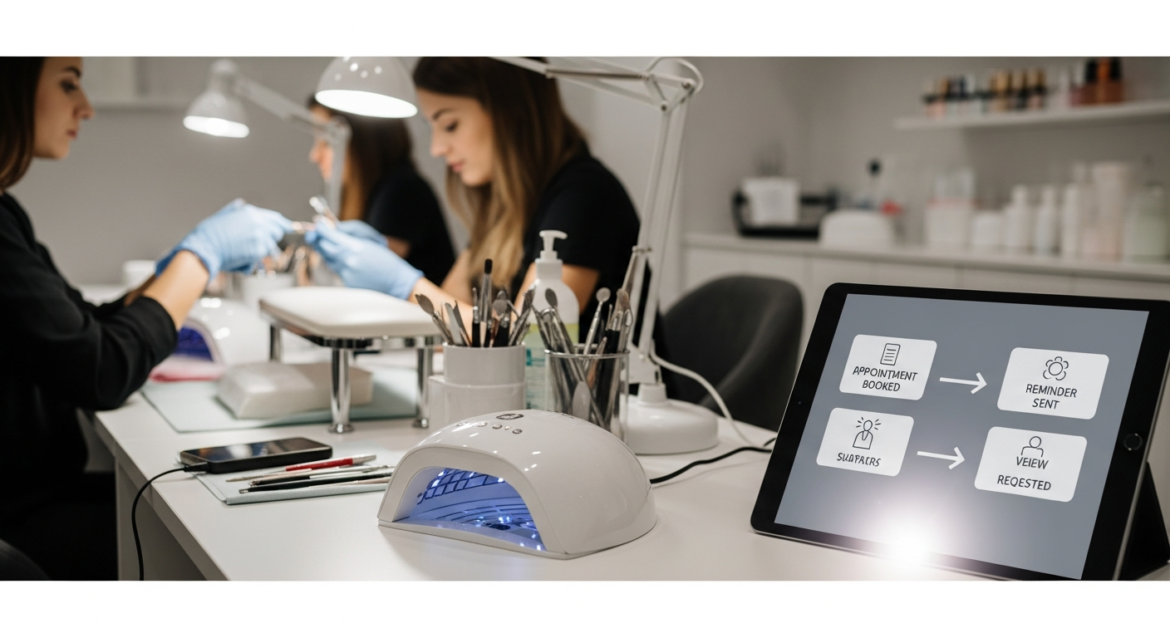
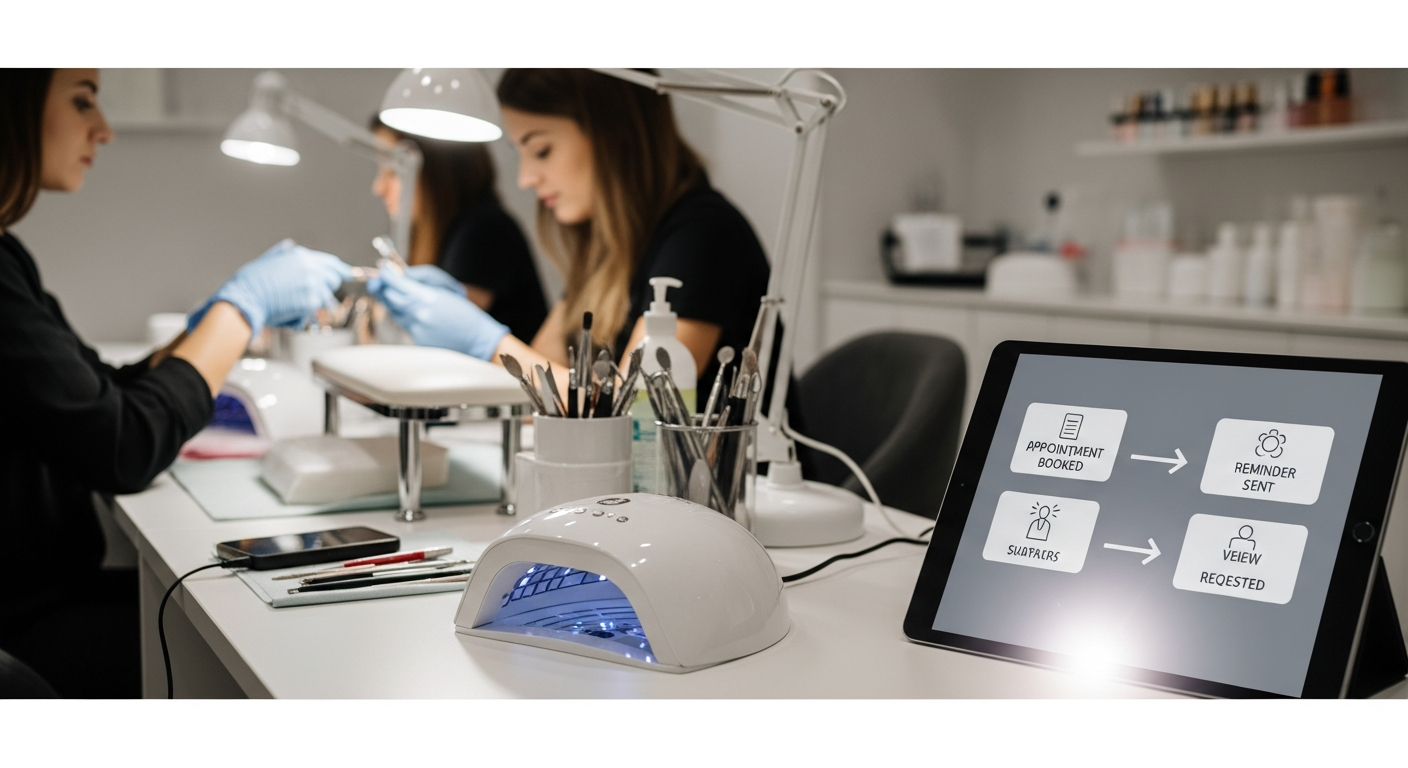
Missed appointments are a significant drain on revenue for any nail salon. Automated reminders send text messages or emails to clients at specific intervals before their scheduled service.

These reminders prompt clients to confirm their attendance or reschedule if necessary. When a client confirms via a simple click, the nail salon staff gains confidence that their daily schedule will remain intact.

Automated systems can also include clear cancellation policies within the confirmation message. This transparency helps set professional boundaries and encourages clients to respect the nail technician’s time.

Standardizing the Daily Service Flow

Automation helps standardize the duration of each nail service, from basic manicures to complex nail art. The system automatically allocates the correct amount of time for each appointment based on the service selected.

This prevents technicians from falling behind and ensures that clients are not left waiting past their scheduled start time. A predictable schedule leads to a calmer environment and a more professional customer experience.

By automating the transition between appointments, nail salons can maximize their station usage. This ensures every hour of the workday is utilized efficiently without overwhelming the staff.

Automated Feedback for Quality Control

Maintaining high service standards is essential for client retention in the nail industry. Automated feedback systems send a follow-up message shortly after the nail service is completed.

This process allows nail salon owners to gather honest insights into the client’s experience. Owners can identify which technicians are performing well and which areas of the service flow may need improvement.

Consistent feedback collection ensures that any issues are addressed immediately. This proactive approach to customer service builds long-term loyalty and ensures a high-quality reputation for the nail salon.

Ensuring a Seamless Client Experience

The primary goal of nail salon booking automation is to create a frictionless journey for the customer. From the moment they book to the moment they leave, every step should feel organized and reliable.

A well-managed automated system removes the guesswork for both the client and the technician. This reliability is what transforms a first-time visitor into a regular, long-term client of the nail salon.

0 comments
0 FacebookTwitterPinterestEmail

Nail Salon Marketing Automation: A Guide for Owners

Nail Salon Marketing Automation Basics for Owners

Nail salon marketing automation is the use of software systems to handle repetitive communication tasks like appointment reminders, thank-you notes, and re-booking prompts. By implementing these automated workflows, nail salon owners can maintain consistent contact with their clients throughout the service cycle without needing to perform manual outreach for every visitor.

How Marketing Automation Works for Nail Salons

Marketing automation operates on a simple “trigger and action” logic. When a client performs a specific action at your nail salon, the system automatically sends a pre-written response.

For example, when a client finishes a pedicure, the system triggers a “thank you” text message two hours later. This ensures every customer receives a professional touchpoint without the front desk staff needing to stop their work.

These systems work in the background 24 hours a day. They handle the routine follow-ups that salon owners often forget when the shop gets busy during peak hours.

What Parts of Nail Salon Marketing Can Be Automated

Appointment Reminders and Confirmations

Automated reminders are the most common tool for reducing no-shows in US nail salons. Systems send a text or email 24 to 48 hours before the scheduled manicure or pedicure.

Post-Service Feedback Requests

You can automate a message to go out shortly after a service asking for a rating. This helps nail salon owners identify unhappy clients privately before a negative review is posted online.

Re-engagement for Inactive Clients

If a client hasn’t visited for three or four weeks, an automated “we miss you” message can be sent. This encourages them to return for their regular fill-in or gel polish change.

Simple Automation Systems for Small Nail Salons

Small nail salons do not need complex or expensive software to start. Most modern digital appointment books already have basic automation features built into their settings.

Start by enabling simple SMS notifications for booking confirmations. This is a low-cost way to professionalize your business and ensure your technicians stay busy.

Focus on one automation at a time. Once your reminders are running smoothly, you can add a simple automated birthday greeting to make clients feel valued.

Understanding Customer Behavior in Local Nail Salons

Most nail salon customers in the United States operate on a predictable two-to-three-week beauty cycle. Automation works best when it aligns with this natural frequency.

Clients appreciate convenience and speed. They are more likely to respond to a text message reminder than a phone call or a long promotional email.

Automated systems allow you to stay top-of-mind. When a client sees a reminder exactly when their nails are starting to grow out, they are highly likely to book immediately.

Common Automation Mistakes Made by Salon Owners

One major mistake is sending too many messages. Over-communicating can annoy regular clients and cause them to opt out of your marketing list entirely.

Another error is using overly formal or “robotic” language. Even though the message is sent by a machine, it should sound like it came from your specific nail salon team.

Lastly, many owners fail to update their automation settings. It is important to check your automated messages occasionally to ensure the timing and details remain accurate for your services.

Budget-Friendly Customer Automation Ideas

    Automatic Birthday Greetings: Send a simple congratulatory text with a small discount during their birth month.
    New Client Welcome: Automatically send a “Welcome to our salon” message after a first-time visit with care instructions for their nails.
    Appointment Receipts: Switch to digital receipts that automatically collect client contact information for future automated follow-ups.
0 comments
0 FacebookTwitterPinterestEmail

Nail Salon Operations Automation: Streamlining Daily Work

Nail Salon Operations Automation: Streamlining Your Daily Workflow

Nail salon operations automation is the implementation of digital systems to manage internal tasks such as staff scheduling, shift coordination, and payroll calculations. These automated systems replace manual paperwork with standardized workflows, ensuring that daily nail salon activities remain consistent and error-free without requiring constant direct supervision from the owner.

Standardizing Daily Workflows with Digital SOPs

Standard Operating Procedures (SOPs) are the backbone of a successful nail salon. By automating these workflows, you ensure every technician follows the same sanitation and preparation steps for every client.

Digital checklists can trigger specific tasks at the start and end of each shift. This automation ensures that no station is left uncleaned and that every opening procedure is completed before the first customer arrives.

When processes are automated, the reliance on individual memory decreases. This creates a predictable environment where the quality of the salon’s internal management does not fluctuate based on which staff members are working.

Automating Staff Scheduling and Shift Coordination

Managing technician shifts manually often leads to double-booking or coverage gaps. Nail salon operations automation tools handle staff availability and shift rotations automatically based on pre-set rules.

These systems allow staff to view their schedules in real-time. Automated alerts can notify technicians of schedule changes, reducing the time owners spend making phone calls or sending manual text messages.

Automated coordination also helps manage walk-in flow more effectively. By syncing staff availability with active floor management, the system can instantly identify which technician is ready for the next service.

Streamlining Internal Payroll and Tip Calculations

Calculating commissions and tips manually is time-consuming and prone to human error. Automation simplifies this by tracking every service performed and calculating the exact payout for each technician.

At the end of each day, automated systems can generate reports that break down service totals, product commissions, and tips. This transparency builds trust between the salon owner and the staff.

By automating the data collection for payroll, salon owners can reduce the hours spent on administrative paperwork. This allows for more accurate financial tracking and faster end-of-week processing.

Reducing Operational Errors Through Systematic Tracking

Manual tracking often leads to missed details in supply levels or service timing. Automation provides a centralized system that monitors internal operations and alerts management when issues arise.

Automated systems can track the duration of specific nail services. If a technician consistently falls outside the expected timeframe, the system identifies the bottleneck so the process can be adjusted.

Consistency is the primary goal of any automated system. By removing manual data entry, a nail salon can maintain high operational standards that protect the business from costly administrative mistakes.

0 comments
0 FacebookTwitterPinterestEmail

Nail Salon Financial Automation: A Guide for Owners

Nail Salon Financial Automation for Busy Owners

Nail salon financial automation is the use of digital systems to automatically sync daily sales and service costs into organized reports. This technology eliminates manual bookkeeping by capturing revenue from your booking system and matching it against salon expenses, providing owners with instant clarity on their actual profit and business performance.

Why Automate Your Salon Finances?

Most nail salon owners spend late nights sorting through paper receipts and daily closeout sheets. Manual tracking leads to errors that make it hard to see if the business is actually making money.

Financial automation replaces the “shoebox method” with a digital flow that works in the background. It ensures every manicure, pedicure, and polish sale is accounted for the moment the client pays.

By automating these workflows, you regain hours of personal time while gaining a clear view of your bank balance and business health.

Automated Revenue Tracking Basics

Revenue tracking is the foundation of nail salon financial automation. Instead of counting cash and credit slips at the end of the shift, systems record transactions in real time.

Daily Sales Sync: Your system should automatically categorize income by service type or product sale. This shows you exactly which services are driving your cash flow without manual tallying.

Digital Deposit Matching: Automation can verify that the money processed through your card terminal matches the amount landing in your business bank account, flagging any discrepancies immediately.

Gaining Visibility into Salon Expenses

Profit isn’t just about what you make; it is about what you keep. Automating expense tracking helps you see where your money is disappearing.

  • Supply Cost Monitoring: Track how much you spend on back-bar supplies like monomer, gel polish, and disposables automatically.
  • Labor Cost Integration: View how much you are paying in technician commissions versus the revenue they generate for the salon.
  • Fixed Cost Alerts: Set up systems to monitor recurring bills like rent, electricity, and insurance to ensure they stay within budget.

Understanding KPI Fundamentals Through Data

Key Performance Indicators (KPIs) are the vital signs of your nail salon. Automation turns raw numbers into simple metrics you can understand at a glance.

Average Ticket Price

This metric shows the average amount a client spends per visit. Automation helps you see if clients are sticking to basic services or adding high-value nail art and paraffin treatments.

Technician Utilization

Automated reports show you which chairs are full and which staff members have the most downtime. This helps you adjust your scheduling to maximize your salon’s earning potential.

Rebooking Rates

Tracking how many clients book their next fill or pedicure before leaving the salon is essential. Automation calculates this percentage for every staff member without extra effort.

Using Performance Data for Better Decisions

The goal of nail salon financial automation is to give you total control over your business. When you have accurate data, you no longer have to “guess” how the salon is performing.

If your automated reports show that supply costs are rising but revenue is flat, you know it is time to look at your inventory waste or adjust your service menu prices.

Automated financial systems provide a “pulse check” for your salon. This clarity allows you to lead your team with confidence and focus on providing the best nail services in your community.

0 comments
0 FacebookTwitterPinterestEmail

Nail Salon Financial Automation: A Guide for Owners

Nail Salon Financial Automation for Owners

Nail salon financial automation is the use of digital systems to automatically capture and organize daily service revenue, technician commissions, and operational costs. This process allows salon owners to monitor their business health in real-time by syncing sales data directly into tracking dashboards, eliminating the need for manual bookkeeping and paper ledgers.

Simplifying Revenue Tracking

Automated revenue tracking captures every manicure, pedicure, and add-on service as it happens. These systems record the payment method, whether cash or card, and link the sale to the specific technician who performed the work.

By automating this flow, owners no longer need to spend hours at the end of the night totaling paper receipts. Digital logs provide an instant view of daily earnings and help identify your busiest hours without any manual math.

This visibility ensures that every dollar earned is accounted for immediately. It also simplifies the process of calculating technician splits, ensuring your staff is paid accurately based on the services they actually performed.

Gaining Visibility into Salon Expenses

Nail salon financial automation also extends to tracking where your money goes. Recurring costs like rent, electricity, and insurance can be programmed into a central system for constant visibility.

Variable costs, such as polish restocks and disposable supplies, can be logged automatically through digital payment records. This allows you to see how much of your revenue is being consumed by overhead each month.

When expenses are automated, you can quickly see if your supply spending is rising faster than your service sales. This early warning helps you adjust purchasing habits before cash flow becomes a problem.

Essential Performance KPIs for Owners

Key Performance Indicators, or KPIs, are simple numbers that tell you if your salon is winning. Automation makes these metrics easy to see without needing a degree in finance.

  • Average Ticket Price: The typical amount a client spends per visit.
  • Technician Productivity: How much revenue each chair generates during its shift.
  • Client Retention: The percentage of customers returning for another appointment.

Automated systems calculate these figures for you every day. Knowing your average ticket price helps you decide if you need to encourage more add-on services like nail art or paraffin waxes.

The Power of Automated Reporting

Automated reporting replaces the messy “shoebox of receipts” with clean, digital summaries. You can set your system to send a weekly performance report directly to your email or phone.

These reports highlight your most profitable services and your busiest days of the week. This allows you to see trends over time, such as a dip in mid-week appointments that might require a special promotion.

Having this data organized makes it much easier to understand the seasonal changes in the nail industry. You can see exactly how your December holiday rush compares to the slower winter months.

Using Data to Make Better Decisions

Financial automation provides the clarity needed to run a salon with confidence. When you know your exact profit margins, you can make smarter choices about your business future.

For example, if the data shows a specific service takes too long for the revenue it generates, you can adjust your menu. This level of control is only possible when your financial data is tracked automatically and accurately.

Ultimately, automation gives you back your time. Instead of sitting in the back office with a calculator, you can focus on your clients and your team while the system handles the numbers.

0 comments
0 FacebookTwitterPinterestEmail

Nail Salon Booking Automation: Streamline Your Services

Nail Salon Booking Automation: Streamline Your Services

Nail salon booking automation is a digital system that manages appointments, sends reminders, and organizes service schedules without manual intervention. By implementing automated booking, nail salons eliminate scheduling errors, reduce missed appointments, and ensure a consistent service flow for technicians and clients throughout the business day.

The Impact of Automated Booking on Nail Salons

Traditional phone-based booking often leads to double-bookings or missed calls during busy shifts.
Automated systems allow clients to view real-time availability for manicures and pedicures at any time.
This ensures your nail salon remains open for business even after your doors have closed.

Automation centralizes your calendar, giving every technician a clear view of their daily tasks.
It removes the need for a dedicated receptionist to manage every single time slot manually.
Owners can focus on service quality rather than managing a paper appointment book.

Eliminating No-Shows with Automated Reminders

No-shows are a significant drain on revenue for independent nail salon owners in the U.S.
Automated appointment reminders send text messages or emails to clients hours before their visit.
These prompts encourage clients to confirm their attendance or reschedule in advance.

By automating the confirmation process, nail salons regain lost hours and fill gaps quickly.
Reliable reminders create a professional image and reinforce the value of the technician’s time.
Consistent communication reduces the likelihood of empty chairs during peak hours.

Standardizing Service Flow and Technician Schedules

Every nail service, from basic polish changes to complex acrylic sets, requires specific timing.
Automation allows salon owners to set fixed durations for every service type offered.
This prevents scheduling overlaps and ensures technicians have enough time for proper sanitation.

Managing Buffering and Turnaround Time

Automated systems can automatically add “buffer time” between different nail appointments.
This time is essential for cleaning stations and preparing tools for the next client.
It prevents the nail salon from falling behind schedule during a hectic afternoon.

Optimizing Technician Specializations

If certain technicians only perform gel manicures, automation routes those bookings correctly.
The system matches the client’s requested service with the staff member’s specific skill set.
This ensures high-quality results and prevents confusion at the front desk.

Improving the Customer Experience Through Reliability

Clients appreciate the ease of selecting their preferred nail technician through an online portal.
Automation provides instant confirmation, giving the client peace of mind that their spot is secured.
A predictable booking process builds trust and encourages repeat visits to your nail salon.

Reliability is the foundation of a successful local service business in a competitive market.
When the booking process is seamless, the client arrives relaxed and ready for their service.
Automation handles the logistics, leaving the technician free to focus on nail artistry.

Automated Feedback Collection for Service Quality

Maintaining high standards requires consistent feedback from every manicure and pedicure client.
Automation can trigger a follow-up message immediately after a client leaves the nail salon.
This invites the customer to rate their experience while the service is still fresh in their mind.

Collecting feedback automatically helps owners identify which technicians are performing best.
It also highlights areas where the service flow may need adjustment or additional training.
Continuous data collection ensures the nail salon maintains a reputation for excellence.

0 comments
0 FacebookTwitterPinterestEmail

Nail Salon Marketing Automation Basics

Nail Salon Marketing Automation Basics

Nail salon marketing automation basics involve using software systems to handle repetitive communication tasks like appointment reminders, review requests, and re-engagement messages. By automating these workflows, salon owners ensure consistent customer contact without manual effort, helping to maintain high retention rates and steady revenue for small local nail businesses.

How Marketing Automation Works for Nail Salons

Marketing automation operates through a simple “trigger and action” logic.

When a client performs a specific action, your system automatically responds.

For example, booking a manicure triggers an immediate confirmation message.

This replaces the need for salon staff to make manual phone calls.

It ensures that every customer receives the same high level of service.

What Parts of Nail Salon Marketing Can Be Automated?

Automated Appointment Reminders

No-shows are a major profit killer for local nail salons.

Automated reminders send a text or email 24 hours before a visit.

This allows clients to confirm or reschedule without calling the shop.

Post-Visit Review Requests

Positive reviews are essential for attracting new local customers.

A system can send a follow-up message two hours after a pedicure.

This captures feedback while the client is still happy with their nails.

Client Re-engagement Messages

Many clients forget to book their next fill or gel removal.

Automation identifies customers who have not visited in three weeks.

The system then sends a friendly “we miss you” message automatically.

Simple Automation Systems for Small Nail Salons

Most small salons can start with their existing booking software.

Look for features that allow for basic SMS or email triggers.

Focus on one or two workflows before trying to automate everything.

Text-based automation usually works best for the nail industry.

Clients are more likely to read a text than an email newsletter.

Budget-Friendly Customer Automation Ideas

Send an automated birthday greeting with a small service upgrade.

Set a reminder for clients to book two weeks after a full set.

This keeps your salon top-of-mind during their regular maintenance cycle.

Automate a “Thank You” message for every first-time customer.

These small steps build loyalty without increasing your daily workload.

Common Automation Mistakes Made by Salon Owners

Sending too many messages can lead to clients blocking your number.

Ensure your automated messages do not sound too robotic or cold.

Always include an easy way for customers to opt-out of messages.

Avoid sending automated texts late at night or very early morning.

Check your system regularly to ensure messages are sending correctly.

Understanding Customer Behavior in Local Nail Salons

Nail salon customers typically follow a two to three-week cycle.

Your automation timing should match this natural beauty routine.

Local clients value convenience and reliability from their regular shop.

Automated systems provide the professional consistency they expect.

This builds trust and ensures your chairs remain full every week.

0 comments
0 FacebookTwitterPinterestEmail