
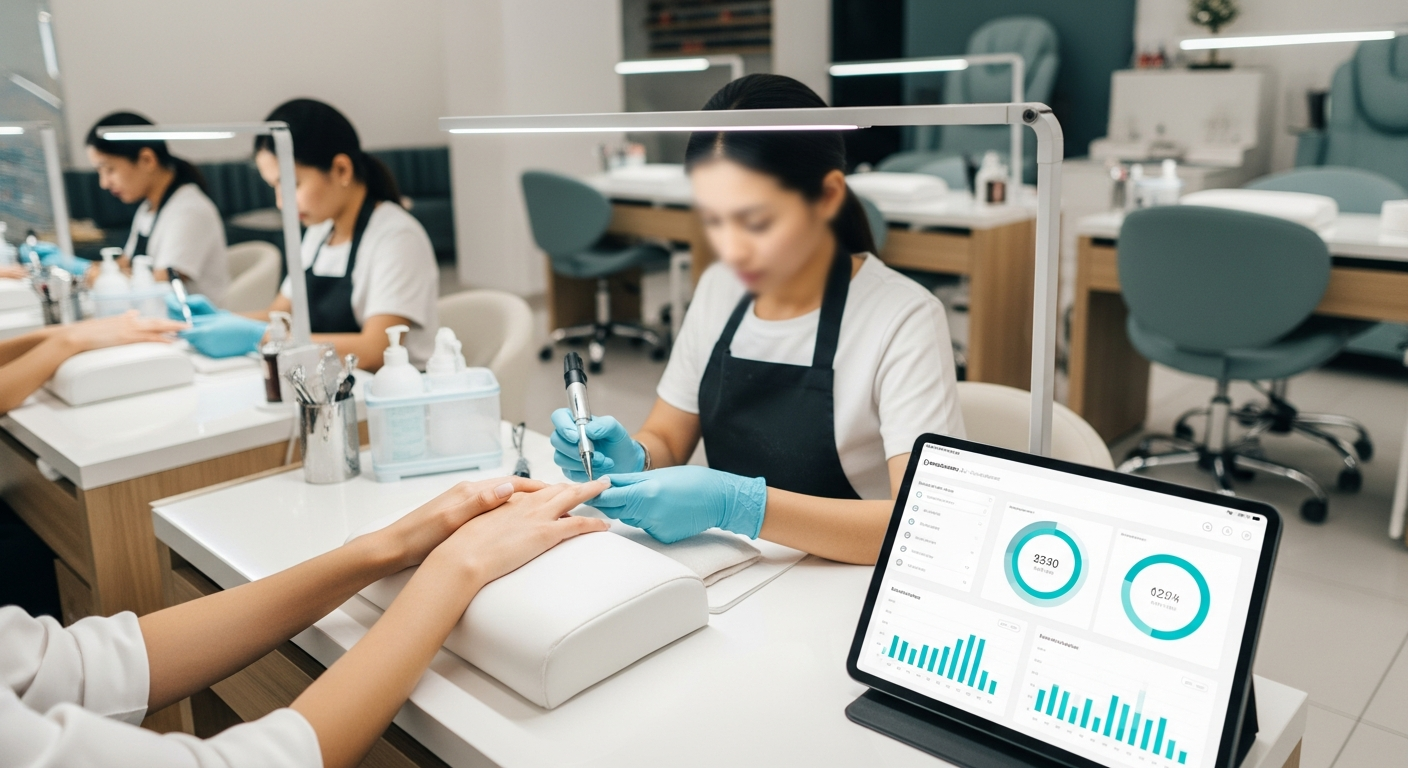
Streamlining Daily Workflows with Nail Salon Operations Automation
Nail salon operations automation is the use of digital systems to standardize daily workflows, manage staff schedules, and streamline back-office tasks like payroll calculation. By implementing automated processes, salon owners ensure consistent service quality and reduce manual errors across all stations without relying on constant personal supervision.
Standardizing Procedures with Automated SOPs
Automating your standard operating procedures (SOPs) ensures every technician follows the same steps for every service. Digital checklists can guide staff through station setup, tool sanitization, and the specific steps of a manicure or pedicure.
When these workflows are digitized, salon owners can monitor task completion in real-time. This eliminates the need for verbal reminders and ensures that health and safety protocols are strictly followed every single day.
Automated systems allow you to update a procedure once and push that change to every staff member instantly. This consistency builds client trust, as they receive the same high-quality results regardless of which technician performs the service.
Automating Staff Schedules and Shift Rotations
Managing a nail salon roster manually often leads to double-booking or understaffing during peak hours. Nail salon operations automation uses digital rosters to balance staff availability with expected walk-in and appointment volume.
Automated scheduling systems allow technicians to view their shifts on their mobile devices and request time off digitally. This reduces the administrative burden on the owner and minimizes the risk of communication breakdowns or missed shifts.
Shift coordination tools can also automate the rotation of technicians for walk-in clients. This ensures a fair distribution of work and helps maintain a positive environment by removing the perception of favoritism in client assignments.
Simplifying Payroll and Tip Distribution
Calculating commissions and tips for a team of nail technicians is a complex daily or weekly task. Automation simplifies this by linking service records directly to payroll calculations based on pre-set commission percentages.
Digital systems can automatically separate credit card tips from service totals and calculate the exact amount owed to each staff member. This reduces the potential for mathematical errors that can cause frustration among your workforce.
Automated payroll reporting provides transparency for both the owner and the technician. Staff can see their earnings in real-time, which improves morale and reduces the time spent answering questions about pay stubs and tip payouts.
Minimizing Service Errors with Digital Workflows
Operational errors often occur when communication is manual or disorganized. Nail salon operations automation uses digital prompts to ensure all services are logged correctly before a client leaves the station.
Systematized workflows prevent technicians from skipping essential steps, such as recording the specific polish color used or documenting an upsell. This data flows automatically into your records, ensuring your inventory and revenue tracking are always accurate.
By relying on these automated systems, salon owners can move away from micro-managing individual performance. The focus shifts to the system itself, which acts as a guardrail to keep daily operations running smoothly and efficiently.
Improving Daily Opening and Closing Routines
Digital automation can manage the critical start and end of the business day through automated alerts. These systems can notify owners if specific opening tasks, like machine prep or cash drawer counts, are not completed by a set time.
Closing checklists automated through a tablet or terminal ensure that no station is left uncleaned and all equipment is powered down. This protects the salon’s assets and ensures the business is ready for the next morning without delays.
Implementing these automated routines transforms a nail salon from a personality-driven business into a process-driven operation. This shift allows the owner to focus on growth while the system manages the daily technical details.
