Category:

Salon Operations Automation

In-depth content on automating nail salon operations, including SOPs, staff scheduling, payroll, tip management, and internal workflows to help salons run smoothly with less manual effort and human dependency.
Automating Nail Salon Operations: A Guide for US Owners

Streamlining Workflows with Nail Salon Operations Automation

Nail salon operations automation is the use of digital systems to standardize daily workflows, staff scheduling, and payroll management. These automated processes replace manual logs with consistent digital triggers, helping US salon owners reduce operational errors and ensure every technician follows the same standard operating procedures (SOPs) without constant direct supervision.

Standardizing Daily Workflows with Digital SOPs

Standard operating procedures (SOPs) ensure every client receives the same quality of service regardless of which technician they see. Automation allows these rules to be built directly into the salon’s daily routine through digital checklists.

When a technician opens their station, an automated system can prompt specific setup tasks. This ensures sanitation protocols and inventory checks happen every single time without manual reminders from the manager.

Automating these workflows removes the need for physical paper logs or whiteboards. Owners can monitor task completion from a central dashboard, ensuring the salon stays compliant and organized throughout the day.

Digital Opening and Closing Checklists

  • Opening Tasks: Automated reminders for station prep, ventilation checks, and supply restocking.
  • Sanitation Logs: Digital timestamps for tool sterilization and foot bath cleaning.
  • Closing Procedures: Automated prompts for register balancing and end-of-day equipment shutdowns.

Automating Staff Scheduling and Shift Coordination

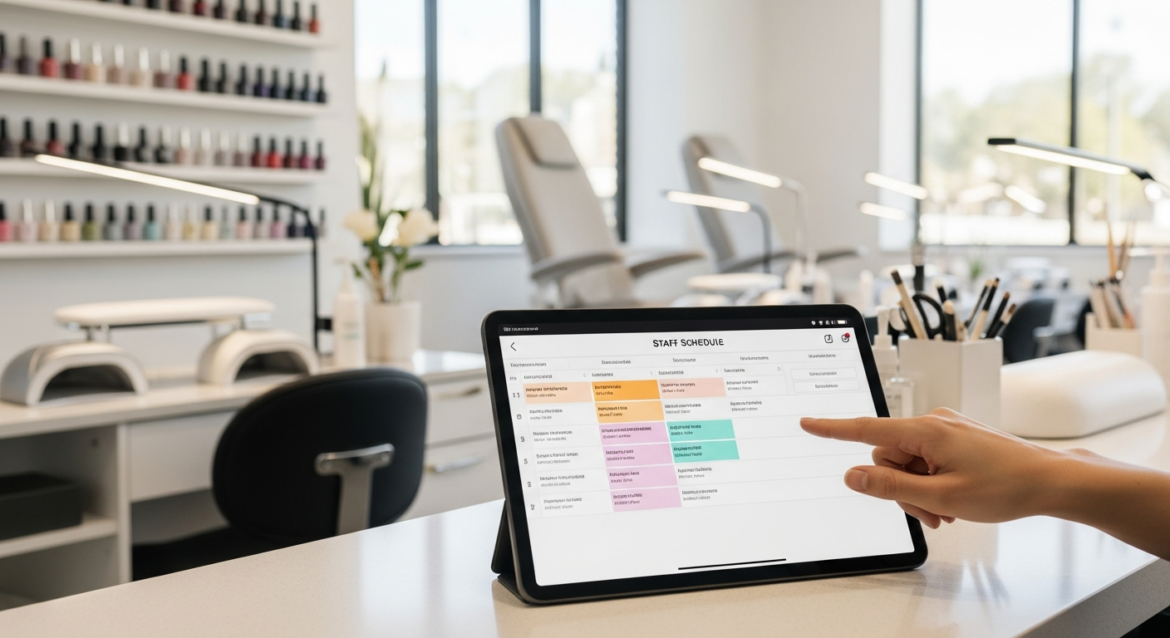
Managing shifts for multiple nail technicians can lead to communication gaps and double-booking. Automated scheduling systems handle shift requests, swaps, and availability updates instantly without owner intervention.

Technicians receive real-time notifications regarding their daily roster via their own devices. This reduces the time owners spend texting staff or updating physical calendars when someone needs to change a shift.

Automated coordination also prevents overbooking during peak weekend hours. The system balances the workload based on staff availability, maintaining a steady flow of traffic through the salon.

Real-Time Shift Notifications

Automated systems send alerts directly to technicians whenever a schedule change occurs. This ensures everyone is aware of their start times and station assignments before they arrive at the salon.

Simplifying Payroll and Tip Management Processes

Calculating daily commissions and tips is often the most time-consuming task for nail salon owners. Automation captures every service transaction and assigns it to the correct technician’s profile instantly.

Digital systems calculate the split between service fees and gratuities automatically at the point of service. This ensures that payroll reports are accurate and ready for review at the end of every pay period.

By removing manual data entry, owners reduce the risk of mathematical errors that cause staff frustration. Automated logs provide a clear record of earnings, making tax preparation and staff payouts much faster.

Reducing Operational Errors through System Consistency

Operational errors often occur when staff rely on memory rather than a structured system. Automation provides a framework that guides staff through complex daily tasks with minimal room for deviation.

Automated alerts can notify owners or managers when a specific operational step, such as a mid-day cleaning cycle, is missed. This allows for immediate correction before the error impacts the client experience.

System-driven operations prioritize process consistency over individual performance. This ensures the nail salon functions smoothly and professionally even when the owner is not physically present on the floor.
0 comments
0 FacebookTwitterPinterestEmail

Mastering Nail Salon Operations Automation for Owners

Streamlining Your Business with Nail Salon Operations Automation

Nail salon operations automation involves using digital systems to standardize internal workflows, staff scheduling, and daily task management. By automating repetitive operational processes, salon owners ensure consistent service quality across all technicians while reducing manual errors in payroll calculations and shift coordination without requiring constant direct supervision.

Standardizing Daily Workflows with Automated SOPs

Standard Operating Procedures (SOPs) are the backbone of a successful nail salon. Automating these workflows ensures that every technician follows the same sanitation and preparation steps.

Digital checklists can replace paper logs for opening and closing duties. These systems notify the owner when tasks are completed, ensuring the salon remains compliant with state board regulations.

Automation keeps the focus on process consistency rather than individual performance. This ensures that every client receives the same high-quality experience regardless of which technician provides the service.

Automating Staff Scheduling and Shift Coordination

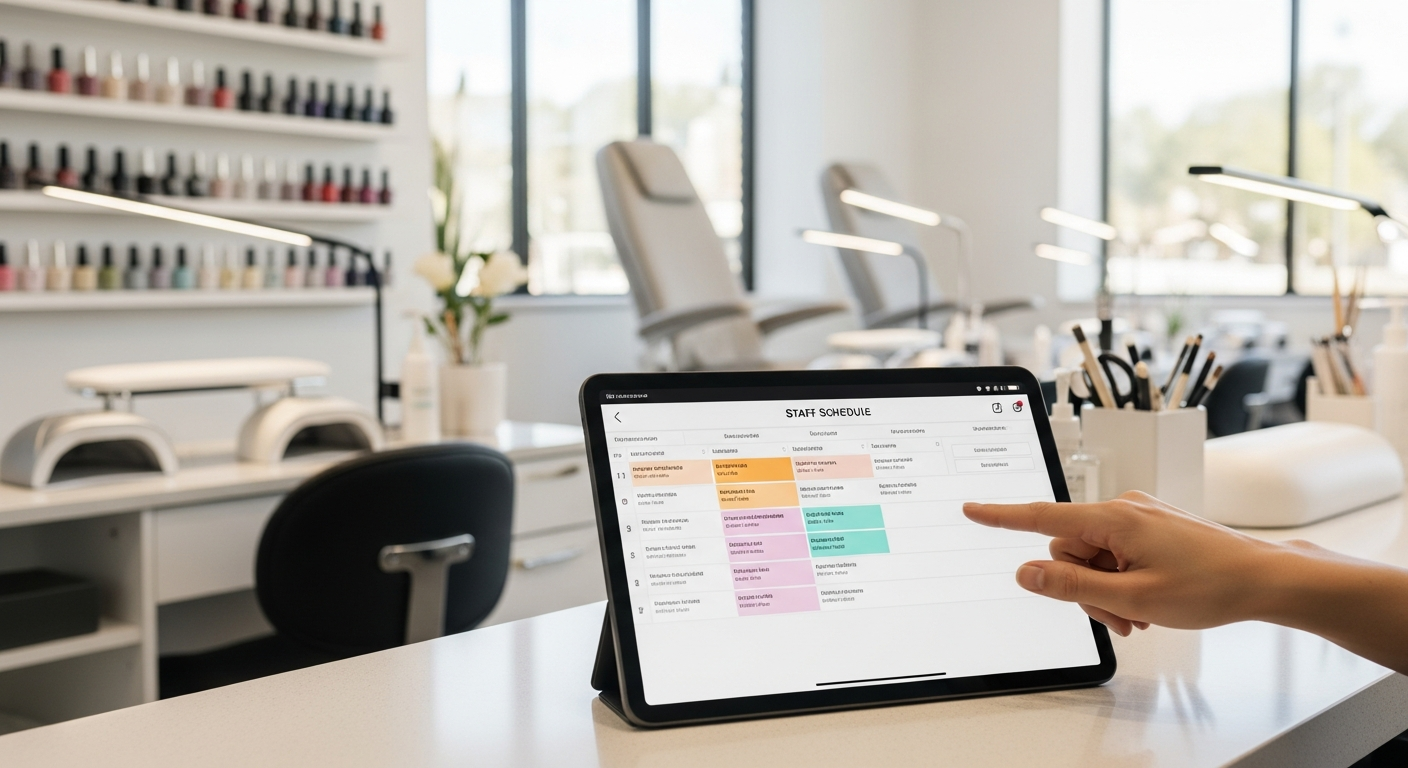
Manual scheduling often leads to double-booking or understaffing during peak hours. Automated scheduling systems manage technician availability and shift rotations based on historical salon data.

These systems automatically handle time-off requests and shift swaps between nail technicians. This reduces the administrative burden on the owner and minimizes communication errors via text or phone.

Automated alerts remind staff of their upcoming shifts several hours in advance. This simple automation significantly reduces late arrivals and helps maintain a smooth flow of daily appointments.

Simplifying Payroll and Tip Process Concepts

Calculating commissions and tips manually is time-consuming and prone to human error. Operations automation simplifies this by capturing service data at the point of completion.

Automated systems can calculate daily earnings and tip distributions based on pre-set percentages. This transparency builds trust with staff and ensures everyone is paid accurately for their specific services.

By automating the data collection for payroll, owners save hours of administrative work each week. This allow owners to focus on salon growth rather than manual spreadsheets and math.

Reducing Operational Errors Through Automated Systems

Operational errors, such as missed sanitation steps or inventory shortages, can hurt a nail salon’s reputation. Automated inventory triggers can alert owners when essential supplies run low.

Internal communication can also be automated to ensure technicians are aware of specific client notes or station changes. This reduces confusion during busy weekend shifts and improves overall efficiency.

Systematizing these internal tasks creates a predictable environment for both staff and management. Automation removes the guesswork, allowing the salon to run smoothly even when the owner is off-site.

Key Benefits of Operational Automation

  • Consistent service delivery across all nail stations.

  • Reduced time spent on manual staff coordination.

  • Improved accuracy in commission and tip calculations.

  • Higher compliance with sanitation and safety standards.

Implementing nail salon operations automation transforms a hectic business into a structured, scalable asset. Owners who embrace these systems find they have more time to lead and less time spent on daily fires.

0 comments
0 FacebookTwitterPinterestEmail

Guide to Nail Salon Operations Automation

How Nail Salon Operations Automation Streamlines Daily Business

Nail salon operations automation is the use of digital systems to standardize daily workflows, staff scheduling, and payroll calculations within a nail business. By automating repetitive administrative tasks and SOP compliance, salon owners reduce manual errors, ensure service consistency across all technicians, and create a predictable environment for both staff and clients.

Standardizing Daily Workflows with Automated Systems

Operating a nail salon requires a specific sequence of daily tasks to remain professional.
Automation helps maintain these workflows by triggering reminders for opening and closing duties.
This ensures every technician follows the same preparation steps regardless of who is working.

Digital SOPs for Consistent Service Quality

Standard Operating Procedures (SOPs) often fail when they are printed in a binder.
Automated systems can present step-by-step checklists to staff members via tablets or stations.
This ensures that every pedicure or gel manicure meets the same quality standards every time.

Automating Staff Scheduling and Shift Coordination

Manual scheduling leads to overlapping shifts or understaffed hours during busy weekend rushes.
Automated scheduling systems use historical data to suggest the right number of technicians.
This prevents the owner from spending hours each week adjusting paper calendars and spreadsheets.

Reducing Gaps in the Daily Floor Schedule

Gaps between appointments result in lost revenue and idle technicians sitting at their desks.
Automation optimizes the daily flow by automatically grouping appointments to maximize floor usage.
This creates a tighter schedule that keeps the salon moving efficiently throughout the day.

Improving Payroll and Tip Processing Efficiency

Calculating weekly pay and daily tips is often the most time-consuming task for an owner.
Automated payroll concepts link service completion data directly to technician compensation records.
This removes the need for manual tallying and reduces disputes over commission percentages.

Minimizing Manual Entry Errors in Compensation

Human error in tracking add-on services like nail art or soak-offs can lead to incorrect pay.
System-driven tracking captures every service price and tip at the moment of completion.
This ensures that technicians are paid accurately for every minute they spend working on clients.

The Benefits of Operational Consistency Over Manual Management

Relying on individual performance leads to unpredictable results and varying levels of service.
Automation shifts the focus from individual memory to a system-driven operational model.
A nail salon that runs on systems is easier to manage and produces more reliable daily profit.

  • Reduced Administrative Burden: Owners spend less time on paperwork and more on quality control.
  • Error Prevention: Automated alerts notify staff if a step in the workflow is missed.
  • Predictable Operations: Digital records provide clear data on daily salon performance.
0 comments
0 FacebookTwitterPinterestEmail

Automating Nail Salon Operations: A Guide for Owners

Streamlining Internal Nail Salon Operations Through Automation

Nail salon operations automation involves using digital systems to standardize daily workflows, staff scheduling, and backend administrative tasks. By automating these internal processes, salon owners reduce manual errors in payroll, ensure consistent service delivery through digital SOPs, and streamline shift coordination, allowing the business to run smoothly without constant owner intervention.

Standardizing Daily Workflows with Digital Checklists

Consistency is the foundation of a successful nail salon.
Automating daily workflows ensures that every technician follows the same steps.
Digital checklists replace paper lists for opening and closing duties.

Automated Opening and Closing Procedures

Systems can trigger reminders for staff to complete sanitation protocols.
Owners receive notifications when essential tasks are finished.
This ensures the nail salon is always ready for the first client.

Step-by-Step Service Consistency

Internal systems guide technicians through specific service protocols.
This reduces variations in how different staff members perform manicures.
Process automation ensures every client receives the same high-quality experience.

Simplifying Staff Scheduling and Shift Coordination

Managing a rotating team of nail technicians can be complex.
Automation removes the manual effort of coordinating weekly shifts.
Digital schedules provide instant updates to the entire team.

Real-Time Shift Visibility

Staff members can view their upcoming hours on mobile devices.
Automated systems handle shift swap requests based on pre-set rules.
This eliminates confusion regarding who is on the floor at any time.

Managing Overtime and Peak Hours

Automation helps owners identify gaps in the daily schedule.
Systems can suggest adjustments to cover busy weekend shifts.
This prevents staff burnout while ensuring enough technicians are available.

Automating Internal Payroll and Tip Calculations

Manual payroll processing is time-consuming and prone to errors.
Nail salon operations automation simplifies how earnings are calculated.
This builds trust between the salon owner and the technicians.

Concept-Level Earnings Tracking

Systems automatically track hours worked and services performed.
Daily totals are compiled without the need for manual tallying.
This ensures staff are paid accurately for every set of nails completed.

Streamlined Tip Distribution

Digital systems categorize credit card tips for each technician.
Owners can view daily tip reports to simplify end-of-day payouts.
This reduces the time spent on administrative math after closing.

Reducing Operational Errors Through Systems

Human error in a nail salon can lead to wasted supplies or lost time.
Automation introduces guardrails that protect the business.
Standardized systems make the salon less dependent on individual memories.

Supply Tracking and Waste Reduction

Automated alerts notify owners when back-bar supplies run low.
Systems track the usage of high-cost items like gel polishes.
This ensures technicians always have the tools needed for every service.

Minimizing Miscommunication

Internal digital notes ensure staff are aware of specific workstation tasks.
Automated logs track when equipment maintenance was last performed.
This proactive approach prevents equipment failure during busy hours.

0 comments
0 FacebookTwitterPinterestEmail

Nail Salon Operations Automation: A Guide for Owners

Streamlining Daily Workflows with Nail Salon Operations Automation

Nail salon operations automation is the use of digital systems to standardize daily workflows, manage staff schedules, and process payroll without manual intervention. By implementing automated SOPs and shift coordination, nail salon owners reduce operational errors, ensure consistent service quality across all technicians, and eliminate time-consuming administrative tasks associated with daily salon management.

Standardizing Nail Salon SOPs Through Automation

Standard Operating Procedures (SOPs) are the backbone of a consistent nail salon. Automation transforms static checklists into interactive digital workflows that technicians must follow.

Automated systems ensure that every station is prepped identically before the first appointment. This removes the reliance on individual memory and places the focus on a repeatable system.

Digital Opening and Closing Checklists

  • Station Readiness: Systems can trigger alerts if sanitation protocols are not logged by a specific time.
  • Inventory Tracking: Automated logs track the usage of lacquers and gels, triggering alerts when supplies run low.
  • End-of-Day Reporting: Digital workflows automatically compile daily performance data for the owner to review remotely.

Automating Staff Shifts and Schedule Coordination

Manual scheduling often leads to double-booking or understaffing during peak weekend hours. Automation synchronizes staff availability with real-time service demand.

Automated shift coordination allows technicians to view their schedules on their own devices. This reduces the need for constant verbal communication regarding shift changes.

Systems can automatically assign specific nail technicians to appointments based on their defined skill sets or shift blocks. This ensures the right staff member is always available for complex services.

Conceptual Payroll and Tip Calculation Systems

Processing payroll and tips is often the most time-consuming task for a nail salon owner. Automation simplifies this by calculating totals based on completed service data.

Automated systems track the exact split between service fees and technician tips. This eliminates manual math errors and ensures staff members are paid accurately for their work.

By automating the calculation of commission structures, owners can generate payroll reports in minutes. This transparency builds trust within the team and reduces administrative overhead.

Reducing Operational Errors with Systematic Workflows

Human error in a nail salon often stems from a lack of clear, automated guidance. Systems provide a digital safety net for daily tasks.

Automation ensures that client preferences and service histories are instantly accessible to the technician. This prevents errors in service selection or nail care customization.

By prioritizing system-driven processes over individual habits, the salon maintains a high standard of quality. Consistency becomes a built-in feature of the business rather than a variable.

Improving Efficiency Through Centralized Data

Nail salon operations automation centralizes all daily activity into a single source of truth. This allows owners to monitor the business without being physically present.

Digital logs replace paper trails, making it easier to track compliance with local health and safety regulations. This organization protects the business during inspections.

Ultimately, automating internal operations allows the owner to focus on high-level management. The salon functions as a well-oiled machine, driven by logic and efficient digital triggers.

0 comments
0 FacebookTwitterPinterestEmail

Nail Salon Operations Automation: A Guide for Owners

Automating Daily Nail Salon Operations

Nail salon operations automation is the process of using digital systems to standardize daily workflows, manage staff schedules, and simplify payroll processes. By implementing automated systems, nail salon owners can reduce manual errors in shift coordination and ensure consistent service delivery across all technician stations without constant direct supervision.

Standardizing Workflows with Digital SOPs

Manual checklists for opening and closing the salon are often overlooked during busy shifts.
Digital standard operating procedures (SOPs) ensure every staff member follows the same protocols.
This creates a consistent experience for every client who visits your nail salon.

Automating Station Preparation and Sanitation

Systems can trigger reminders for technicians to sanitize foot baths and organize implements.
Automated logs track when each station was last cleaned according to state regulations.
This reduces the risk of compliance errors and maintains high safety standards effortlessly.

Simplifying Staff Scheduling and Shift Coordination

Managing technician availability manually leads to scheduling conflicts and double bookings.
Automation software handles shift swaps and time-off requests based on pre-set salon rules.
Owners save hours every week by eliminating back-and-forth text messages with staff members.

Optimizing the Daily Floor Schedule

Automated systems analyze peak hours to suggest the ideal number of technicians needed.
This prevents the salon from being understaffed during weekend rushes or overstaffed on slow mornings.
A balanced schedule ensures that walk-in traffic and appointments are handled efficiently.

Automating Payroll and Tip Calculations

Calculating commissions and tips manually at the end of a shift is time-consuming and error-prone.
Automation tracks every manicure and pedicure performed by each technician in real time.
This ensures accurate payouts and builds trust between the salon owner and the staff.

Reducing Errors in Daily Transaction Tracking

Integrated systems automatically sync service totals with individual technician performance logs.
This eliminates the need for paper tip envelopes or manual tally sheets at the front desk.
Automated reporting provides a clear view of daily revenue without manual data entry.

Improving Operational Consistency Through Systems

Relying on systems rather than individual performance creates a more resilient nail salon.
Automation ensures that operational tasks are completed even when the owner is off-site.
Consistent systems lead to a predictable environment for both the technicians and the clients.

Reducing Manual Tasks for the Front Desk

Automated notifications alert staff when inventory for acrylics or gels is running low.
This prevents service interruptions caused by missing supplies during a busy workday.
The front desk can focus on greeting clients rather than managing internal logistics.

0 comments
0 FacebookTwitterPinterestEmail

Automating Nail Salon Operations: A Guide for Owners

Streamlining Daily Workflows with Nail Salon Operations Automation

Nail salon operations automation is the process of using digital systems to standardize daily workflows, staff scheduling, and payroll calculations. By implementing automated SOPs, salon owners reduce manual errors and ensure consistent service delivery, allowing the business to run efficiently without constant hands-on management or verbal instructions for repetitive tasks.

Standardizing Daily Nail Salon Workflows

Nail salon operations automation begins with digitizing the opening and closing routines. Instead of relying on memory, technicians follow digital checklists that trigger reminders for station preparation and sanitation protocols.

Automated systems can track when a pedicure tub has been disinfected or when a manicure station is ready for the next client. This ensures every staff member maintains the same high standard of cleanliness and organization.

By removing the guesswork from daily tasks, owners ensure that the salon remains compliant with state board regulations. Digital logs provide an unchangeable record of completed operational tasks for future reference.

Automating Staff Scheduling and Shift Coordination

Managing shifts for multiple nail technicians requires precision to prevent overstaffing or coverage gaps. Nail salon operations automation tools allow owners to set recurring schedules based on historical peak hours.

Automated shift coordination enables technicians to view their hours and request swaps through a centralized system. This reduces the time owners spend communicating changes via text or paper calendars.

Systems can also send automated notifications to staff regarding their upcoming shifts. This direct communication minimizes late arrivals and ensures the salon is always ready to receive scheduled appointments.

Improving Shift Transitions

When shifts change, automation helps hand over pending tasks between technicians. Digital notes regarding supply levels or station maintenance ensure the incoming team is fully prepared.

Standardized digital handovers prevent the loss of important operational information during busy transition periods. This maintains a calm environment for both the staff and the clients.

Simplifying Payroll and Tip Processing

Calculating pay for nail technicians often involves complex variables like hourly rates and commission splits. Automation calculates these totals instantly based on recorded service data and time clock entries.

Digital systems also automate the distribution and tracking of tips. This transparency reduces disputes and ensures that every technician is compensated accurately for their specific nail services.

By automating these financial calculations, salon owners save hours of manual data entry each week. This system-based approach eliminates the math errors commonly found in hand-written ledgers.

Reducing Operational Errors Through Automated SOPs

Standard Operating Procedures (SOPs) are the backbone of a successful salon. Automation turns these procedures into interactive guides that technicians follow for every service, from acrylic sets to gel removals.

When a process is automated, the system prompts the technician to confirm specific steps, such as checking polish inventory or verifying client preferences. This reduces the likelihood of service inconsistencies.

Automated SOPs ensure that every client receives the same quality of care, regardless of which technician performs the service. This focus on systems over individual performance builds a more reliable business model.

Inventory and Supply Automation

Operational automation also extends to managing the professional products used at each station. Systems can track the usage of lacquers, monomers, and files based on the services performed each day.

Automated alerts notify the owner when back-bar supplies reach a specific threshold. This prevents the salon from running out of essential items during peak business hours.

0 comments
0 FacebookTwitterPinterestEmail

Nail Salon Operations Automation: Streamlining Daily Work

Nail Salon Operations Automation: Streamlining Your Daily Workflow

Nail salon operations automation is the implementation of digital systems to manage internal tasks such as staff scheduling, shift coordination, and payroll calculations. These automated systems replace manual paperwork with standardized workflows, ensuring that daily nail salon activities remain consistent and error-free without requiring constant direct supervision from the owner.

Standardizing Daily Workflows with Digital SOPs

Standard Operating Procedures (SOPs) are the backbone of a successful nail salon. By automating these workflows, you ensure every technician follows the same sanitation and preparation steps for every client.

Digital checklists can trigger specific tasks at the start and end of each shift. This automation ensures that no station is left uncleaned and that every opening procedure is completed before the first customer arrives.

When processes are automated, the reliance on individual memory decreases. This creates a predictable environment where the quality of the salon’s internal management does not fluctuate based on which staff members are working.

Automating Staff Scheduling and Shift Coordination

Managing technician shifts manually often leads to double-booking or coverage gaps. Nail salon operations automation tools handle staff availability and shift rotations automatically based on pre-set rules.

These systems allow staff to view their schedules in real-time. Automated alerts can notify technicians of schedule changes, reducing the time owners spend making phone calls or sending manual text messages.

Automated coordination also helps manage walk-in flow more effectively. By syncing staff availability with active floor management, the system can instantly identify which technician is ready for the next service.

Streamlining Internal Payroll and Tip Calculations

Calculating commissions and tips manually is time-consuming and prone to human error. Automation simplifies this by tracking every service performed and calculating the exact payout for each technician.

At the end of each day, automated systems can generate reports that break down service totals, product commissions, and tips. This transparency builds trust between the salon owner and the staff.

By automating the data collection for payroll, salon owners can reduce the hours spent on administrative paperwork. This allows for more accurate financial tracking and faster end-of-week processing.

Reducing Operational Errors Through Systematic Tracking

Manual tracking often leads to missed details in supply levels or service timing. Automation provides a centralized system that monitors internal operations and alerts management when issues arise.

Automated systems can track the duration of specific nail services. If a technician consistently falls outside the expected timeframe, the system identifies the bottleneck so the process can be adjusted.

Consistency is the primary goal of any automated system. By removing manual data entry, a nail salon can maintain high operational standards that protect the business from costly administrative mistakes.

0 comments
0 FacebookTwitterPinterestEmail

Nail Salon Operations Automation: A Streamlining Guide

Streamlining Daily Workflows with Nail Salon Operations Automation

Nail salon operations automation is the use of digital systems to standardize internal workflows, such as technician scheduling, opening and closing procedures, and payroll calculations. By automating repetitive administrative tasks, nail salon owners ensure consistent service delivery, reduce human error, and minimize the time spent on daily manual coordination.

Automating Daily Nail Salon Workflows

Daily workflows involve the repetitive tasks required to keep a salon running from morning to night. Automation replaces manual clipboards with digital checklists that trigger alerts for staff members.

These systems ensure that station sanitation, tool sterilization, and polish inventory checks happen at specific intervals without constant owner supervision. Automated reminders keep the team on track during busy shifts.

By digitizing these routine tasks, salon owners can verify completion remotely. This ensures that every technician follows the same operational standard every single day.

Standardizing Procedures through Automated SOPs

Standard Operating Procedures (SOPs) are the backbone of a professional nail salon environment. Automation allows these procedures to be integrated directly into the daily work routine.

When a specific service is performed, automated systems can display step-by-step prep and cleanup requirements for the technician. This eliminates confusion regarding which chemicals or tools to use.

Process consistency is achieved when the system dictates the flow of the workday. This reduces the variability that often occurs when different staff members use different methods.

Simplifying Staff Scheduling and Shift Coordination

Manual scheduling often leads to double-booking or understaffing during peak weekend hours. Automated scheduling systems manage shift rotations based on pre-set availability and salon capacity.

Staff members can view their upcoming shifts on their own devices, reducing the need for phone calls or text threads. Automated notifications alert the team of any last-minute schedule changes.

This level of automation also manages shift swaps and time-off requests within defined rules. It ensures the salon always has the right number of technicians available to meet demand.

Automating Payroll and Tip Calculations

Calculating weekly pay and distributing tips is a time-consuming manual process for many small nail salons. Automation simplifies this by syncing worked hours directly with service records.

Systems can automatically calculate commissions based on the services performed by each technician. This removes the need for manual tallying at the end of the day or week.

Tip distribution can also be automated at the concept level to ensure accuracy and transparency. This reduces disputes and ensures that staff are paid correctly for their labor.

Reducing Operational Errors Through Systems

Human error in a nail salon often leads to inventory shortages or missed maintenance tasks. Automated inventory tracking monitors the usage of gels, acrylics, and lacquers in real-time.

When supplies reach a certain threshold, the system can generate a restock alert. This prevents the salon from running out of essential products during a busy service window.

  • Consistency: Every technician follows the same automated prep and cleanup steps.
  • Accuracy: Digital logs prevent errors in timekeeping and service recording.
  • Efficiency: Owners spend less time on paperwork and more time on quality control.

Focusing on these automated systems allows a nail salon to function as a predictable business. It shifts the reliance from individual memory to a reliable, repeatable operational framework.

0 comments
0 FacebookTwitterPinterestEmail

Automating Nail Salon Operations for Better Efficiency

Streamlining Daily Nail Salon Operations Through Automation

Nail salon operations automation involves using digital systems to standardize daily workflows, manage staff schedules, and process technician payroll. By automating repetitive administrative tasks, salon owners ensure consistent service delivery, reduce human error in tip distribution, and maintain operational stability without manual oversight of every internal process.

Standardizing Workflows with Digital SOPs

Operating a nail salon requires strict adherence to sanitation and preparation protocols.
Automated Standard Operating Procedures (SOPs) replace paper checklists with digital prompts.
This ensures every technician follows the same steps for station setup and tool sterilization.

When systems guide the daily flow, owners spend less time micromanaging staff.
Digital checklists can trigger alerts if opening or closing tasks remain incomplete.
This consistency protects the salon from operational lapses and maintains service quality.

Automating Station Readiness

  • Digital reminders for restocking towels and liquids at each station.
  • Automated prompts for checking sanitation logs between clients.
  • End-of-day workflow verification for curing lamps and ventilation systems.

Automating Staff Scheduling and Shift Coordination

Manual scheduling often leads to double-booking or understaffing during peak nail salon hours.
Automation allows for self-service shift management based on technician availability.
This reduces the time owners spend on phone calls or text messages regarding hours.

Automated systems can handle shift swap requests according to pre-set salon rules.
Staff receive instant notifications of schedule changes directly on their devices.
This transparency improves coordination and ensures the salon is always adequately staffed.

Simplifying Payroll and Tip Distribution

Calculating technician commissions and daily tips is a frequent source of operational error.
Nail salon operations automation tracks service totals and tip percentages in real-time.
This eliminates the need for manual tallying at the end of a long shift.

Automated payroll systems categorize earnings by service type or technician level.
This ensures that commission splits are calculated accurately according to salon policy.
Staff trust is increased when the margin for human error in pay is removed.

Improving Financial Consistency

  • Real-time tracking of individual technician service volume.
  • Automatic calculation of credit card tips versus cash distributions.
  • Simplified reporting for daily salon payouts and labor costs.

Reducing Operational Errors Through Systems

Human error in a fast-paced nail salon often results from manual data entry.
Systems that automate task tracking ensure that inventory levels and supply needs are monitored.
This prevents the common issue of running out of essential gels or acrylics mid-service.

By shifting focus from individual performance to systemized processes, the salon runs smoothly.
Automation provides a clear history of all daily activities and operational decisions.
This data allows owners to identify bottlenecks in the workflow without constant physical presence.

0 comments
0 FacebookTwitterPinterestEmail
Newer Posts