Category:

Salon Operations Automation

In-depth content on automating nail salon operations, including SOPs, staff scheduling, payroll, tip management, and internal workflows to help salons run smoothly with less manual effort and human dependency.
Automating Nail Salon Operations for Better Efficiency

Streamlining Daily Nail Salon Operations Through Automation

Nail salon operations automation involves using digital systems to standardize daily workflows, manage staff schedules, and process technician payroll. By automating repetitive administrative tasks, salon owners ensure consistent service delivery, reduce human error in tip distribution, and maintain operational stability without manual oversight of every internal process.

Standardizing Workflows with Digital SOPs

Operating a nail salon requires strict adherence to sanitation and preparation protocols.
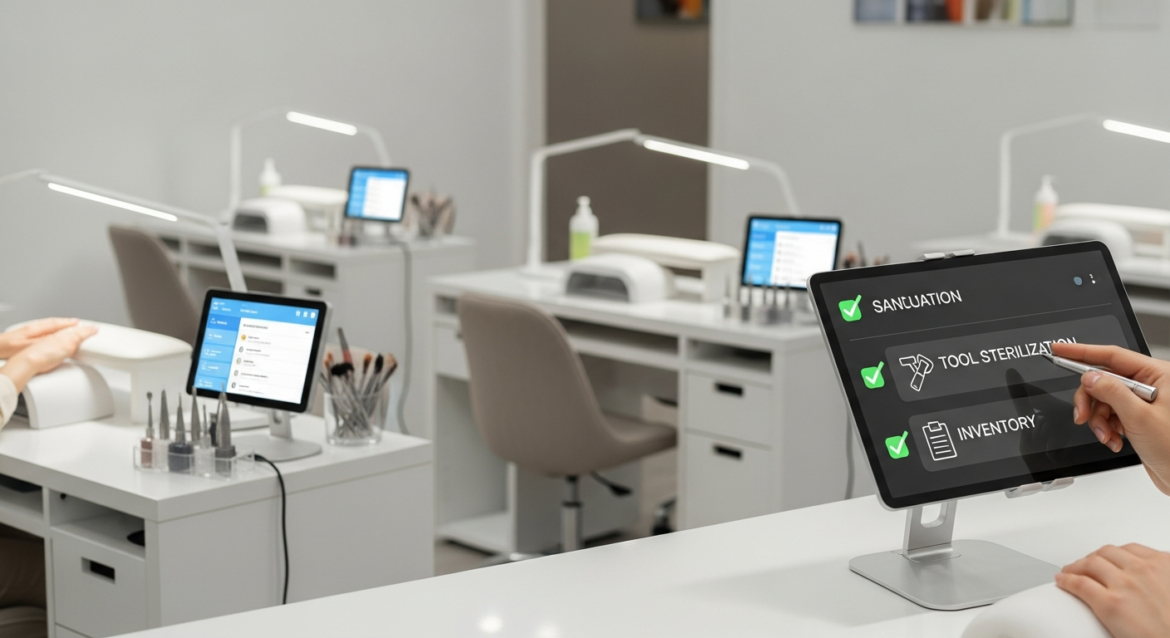
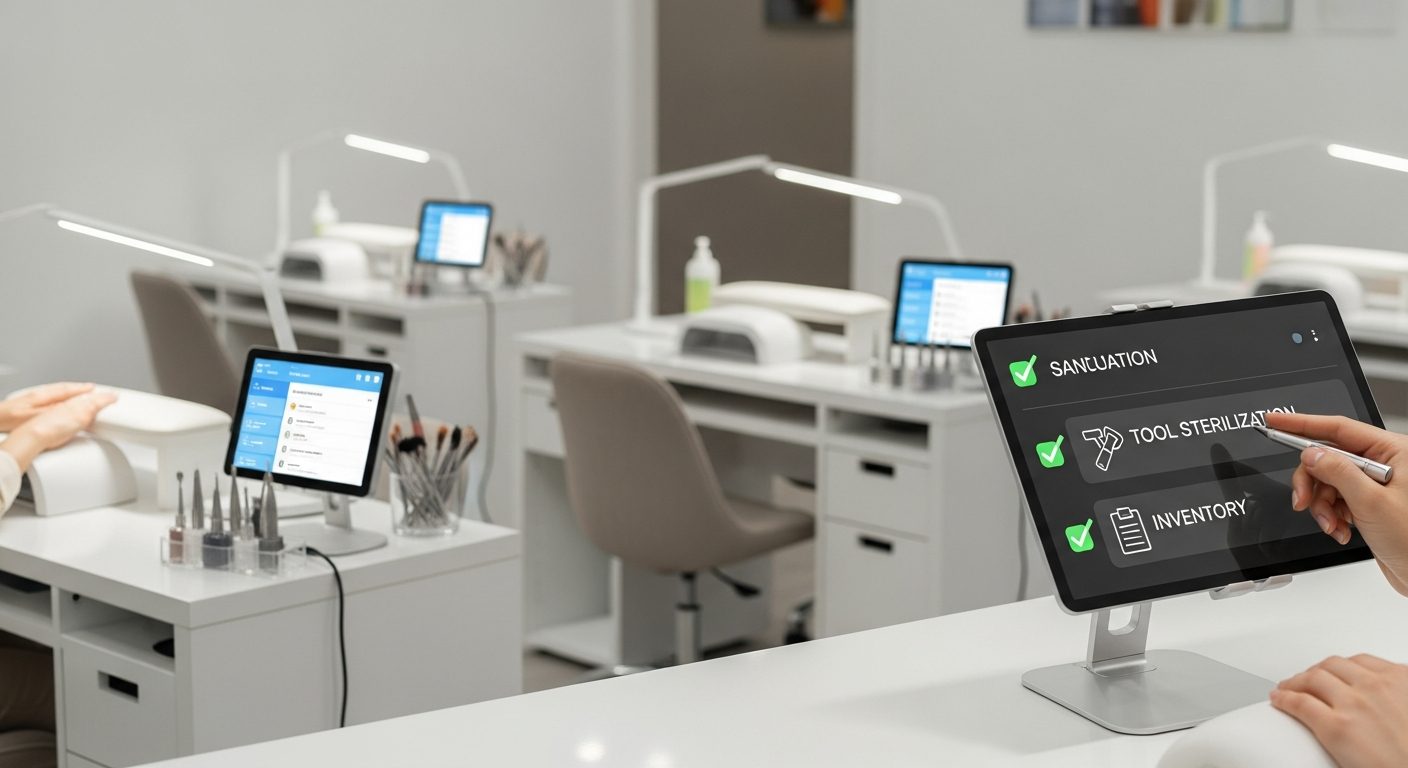
Automated Standard Operating Procedures (SOPs) replace paper checklists with digital prompts.
This ensures every technician follows the same steps for station setup and tool sterilization.

When systems guide the daily flow, owners spend less time micromanaging staff.
Digital checklists can trigger alerts if opening or closing tasks remain incomplete.
This consistency protects the salon from operational lapses and maintains service quality.

Automating Station Readiness

  • Digital reminders for restocking towels and liquids at each station.
  • Automated prompts for checking sanitation logs between clients.
  • End-of-day workflow verification for curing lamps and ventilation systems.

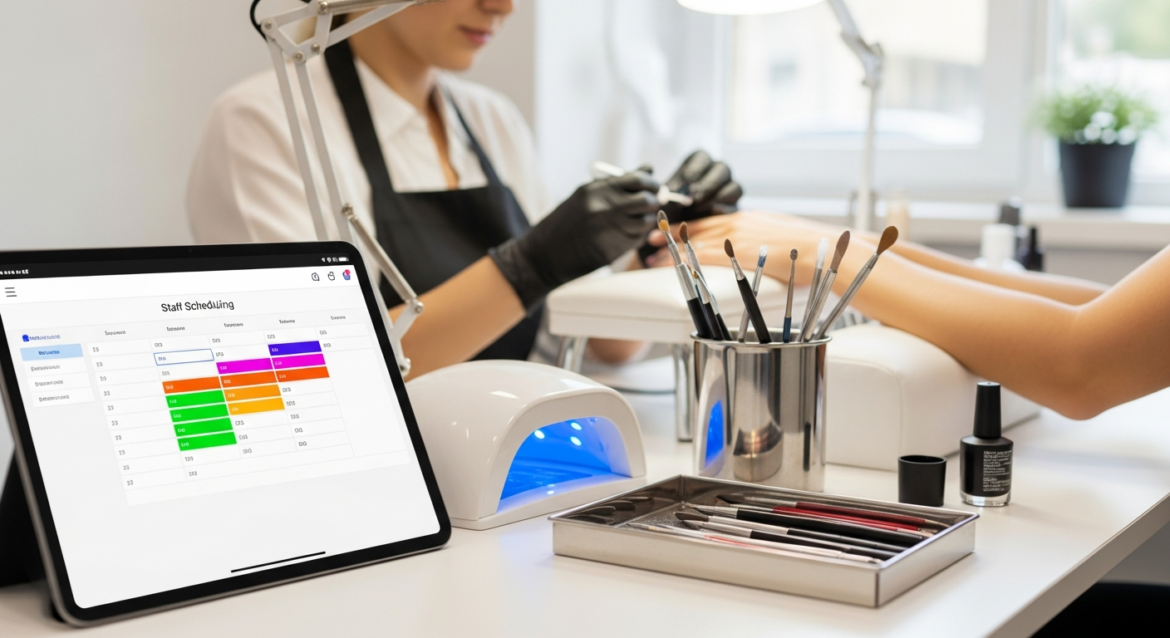
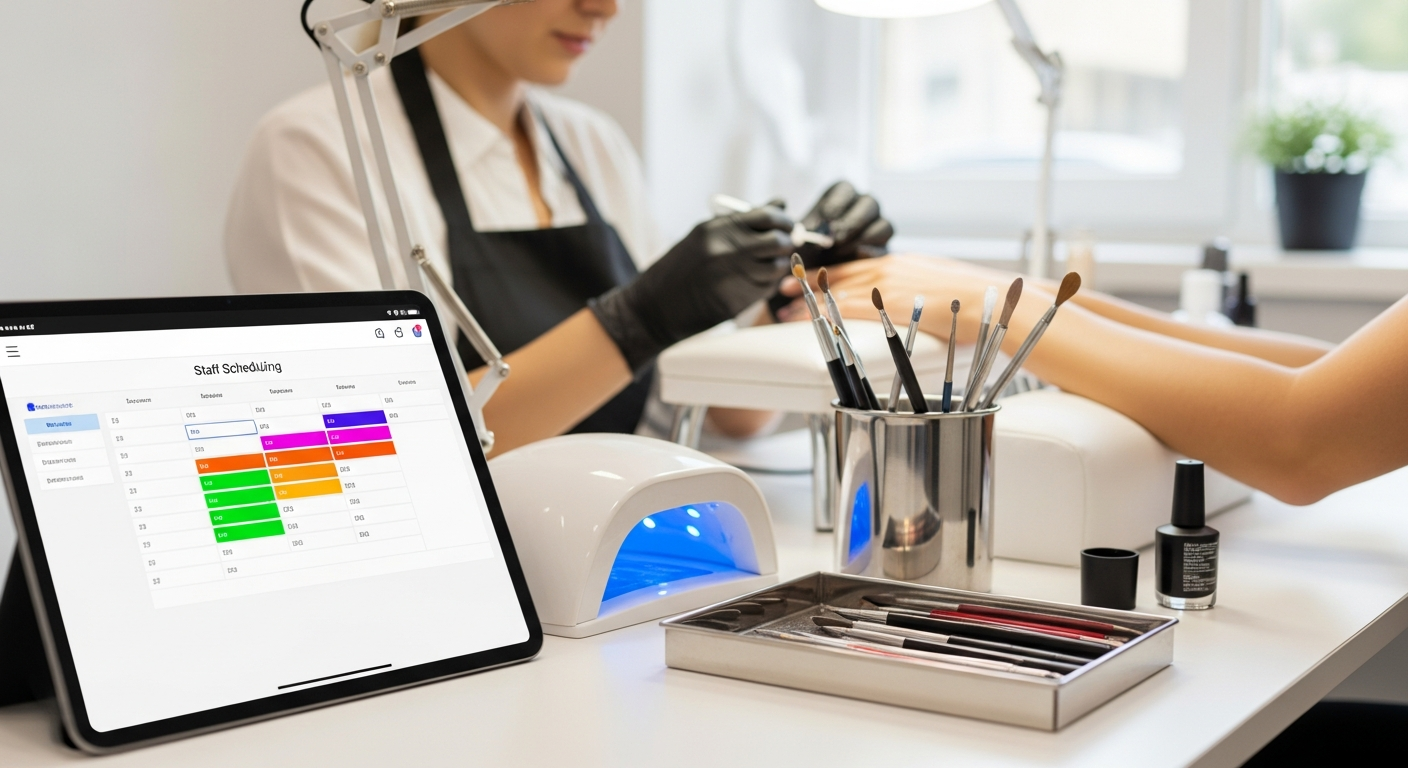
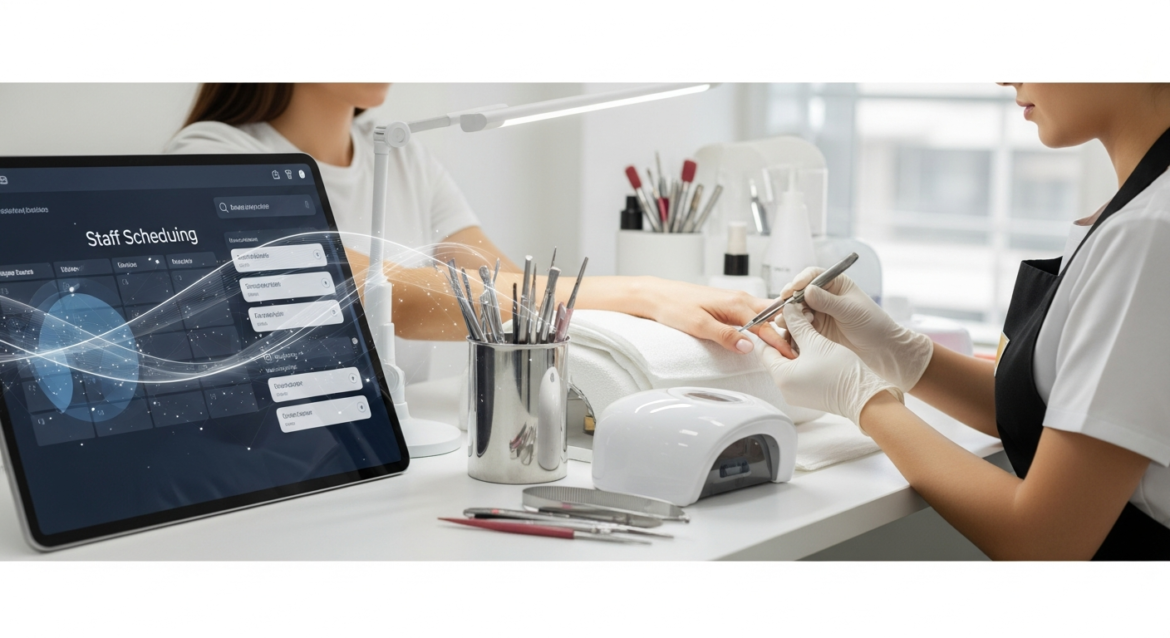
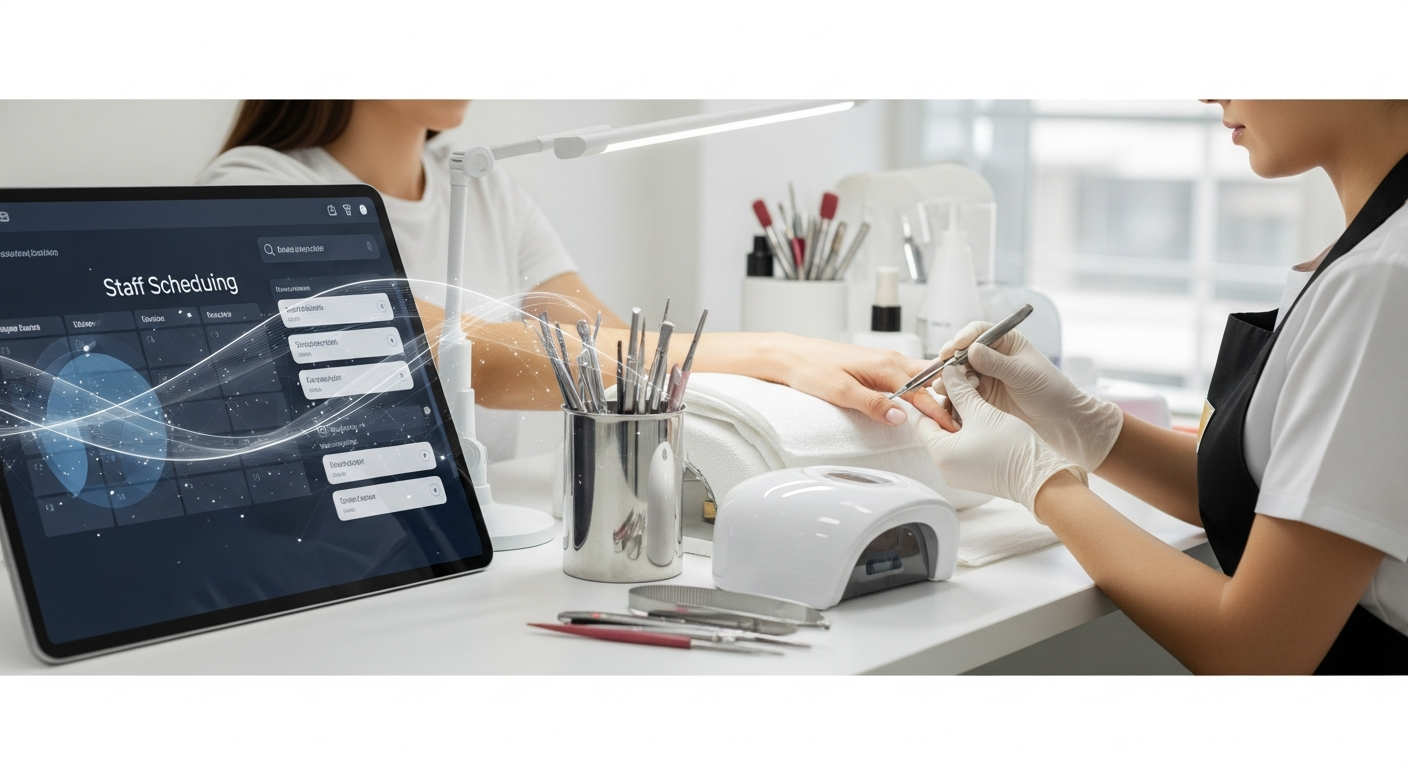
Automating Staff Scheduling and Shift Coordination

Manual scheduling often leads to double-booking or understaffing during peak nail salon hours.
Automation allows for self-service shift management based on technician availability.
This reduces the time owners spend on phone calls or text messages regarding hours.

Automated systems can handle shift swap requests according to pre-set salon rules.
Staff receive instant notifications of schedule changes directly on their devices.
This transparency improves coordination and ensures the salon is always adequately staffed.

Simplifying Payroll and Tip Distribution

Calculating technician commissions and daily tips is a frequent source of operational error.
Nail salon operations automation tracks service totals and tip percentages in real-time.
This eliminates the need for manual tallying at the end of a long shift.

Automated payroll systems categorize earnings by service type or technician level.
This ensures that commission splits are calculated accurately according to salon policy.
Staff trust is increased when the margin for human error in pay is removed.

Improving Financial Consistency

  • Real-time tracking of individual technician service volume.
  • Automatic calculation of credit card tips versus cash distributions.
  • Simplified reporting for daily salon payouts and labor costs.

Reducing Operational Errors Through Systems

Human error in a fast-paced nail salon often results from manual data entry.
Systems that automate task tracking ensure that inventory levels and supply needs are monitored.
This prevents the common issue of running out of essential gels or acrylics mid-service.

By shifting focus from individual performance to systemized processes, the salon runs smoothly.
Automation provides a clear history of all daily activities and operational decisions.
This data allows owners to identify bottlenecks in the workflow without constant physical presence.
0 comments
0 FacebookTwitterPinterestEmail

Nail Salon Operations Automation: A Guide for Owners

Nail Salon Operations Automation for Daily Efficiency

Nail salon operations automation refers to the use of standardized systems and digital workflows to manage daily tasks like staff scheduling, shift handovers, and payroll calculations. By replacing manual checklists with automated processes, salon owners ensure consistent service delivery, reduce administrative errors, and maintain operational efficiency across every station.

Standardizing Daily Nail Salon Workflows

Daily operations in a nail salon require repetitive tasks that are often forgotten during busy shifts.
Automation allows owners to digitize opening and closing checklists so every technician follows the same steps.
This ensures that stations are sanitized and supplies are restocked without constant manual supervision.

Digital SOPs provide technicians with clear, step-by-step instructions for every service offered.
When these processes are automated, the system prompts staff to confirm completion of specific tasks.
This reduces the reliance on an owner’s physical presence to maintain high operational standards.

Automated Station Preparation

  • Supply Tracking: Systems can flag low inventory based on the number of services performed.
  • Sanitation Logs: Digital timers and logs ensure every pedicure tub and tool set meets safety codes.
  • Consistency: Automation ensures every client receives the same level of prep, regardless of the technician.

Staff Scheduling and Shift Coordination

Managing a nail salon team requires complex scheduling to cover peak hours and weekend rushes.
Automated scheduling systems distribute shifts based on technician availability and service specialties.
This eliminates the need for paper calendars or back-and-forth text messages with staff members.

Real-time updates allow technicians to see their daily line-up on their own mobile devices.
If a shift changes, the system automatically notifies the affected staff and updates the master roster.
This reduces confusion and ensures the salon is always properly staffed for walk-ins and appointments.

Automating Payroll and Tip Processing

Calculating weekly payroll and distributing tips is a significant administrative burden for salon owners.
Nail salon operations automation simplifies this by linking service completion data directly to payroll.
The system automatically calculates commissions based on the specific nail services performed by each technician.

Automated tip pooling or direct tip tracking removes the risk of human error in math.
This transparency builds trust with staff because they can see their earnings updated in real-time.
It also saves owners hours of manual data entry at the end of every pay period.

Reducing Operational Errors Through Systems

Human error is the leading cause of service delays and inventory shortages in nail salons.
By implementing automated operational systems, owners create a “fail-safe” environment for their team.
The system acts as a digital manager that monitors progress and flags issues before they become problems.

Standardized digital workflows ensure that even new staff members can operate at a high level.
When the process is automated, the business relies on the system rather than individual memory.
This results in a more predictable, professional environment for both the staff and the clients.

Key Benefits of Operational Automation

  • Time Savings: Owners spend less time on paperwork and more time on business growth.
  • Error Reduction: Automated calculations prevent costly mistakes in payroll and supply ordering.
  • Staff Accountability: Digital logs clearly show which tasks were completed and by whom.
0 comments
0 FacebookTwitterPinterestEmail

Nail Salon Operations Automation: Essential Owner Guide

Nail Salon Operations Automation for Daily Efficiency

Nail salon operations automation is the use of digital systems and standardized protocols to manage daily workflows, staff scheduling, and payroll tasks without manual intervention. By implementing these automated processes, salon owners ensure service consistency, reduce operational errors, and maintain organized shift coordination across the entire nail technician team.

Standardizing Daily Nail Salon Workflows

Automating daily workflows ensures that every opening and closing task is performed correctly every time.
Digital checklists can trigger notifications for technicians, ensuring stations are sanitized and supplies are restocked.
This system shifts the responsibility from the owner’s memory to a repeatable digital process.

Automation allows for uniform service delivery regardless of which technician is working.
By embedding Standard Operating Procedures (SOPs) into a central digital dashboard, staff can access step-by-step instructions.
This reduces the time owners spend answering repetitive questions about daily salon maintenance.

Automated Staff Scheduling and Shift Coordination

Manual scheduling often leads to double-booking or coverage gaps during busy weekend hours.
Nail salon operations automation uses logic-based systems to manage shift rotations and time-off requests.
Automated alerts notify technicians of their upcoming shifts, reducing the likelihood of no-shows.

These systems can also handle last-minute shift swaps between technicians without owner intervention.
The system automatically updates the master schedule once a swap is approved based on pre-set rules.
This ensures the salon remains fully staffed during peak hours for manicures and pedicures.

Streamlining Payroll and Tip Processes

Calculating commissions and tips manually is time-consuming and prone to mathematical errors.
Automation syncs daily service records directly with payroll systems to calculate earnings instantly.
This ensures technicians are paid accurately for every gel set or acrylic fill they perform.

Automated tip distribution systems provide transparency for staff and peace of mind for owners.
Owners can set rules for how pooled tips or individual gratuities are processed and recorded.
This reduces disputes and ensures compliance with basic financial record-keeping standards.

Reducing Operational Errors Through Systems

Operational errors often occur when communication between the front desk and technicians breaks down.
Automation bridges this gap by sending real-time updates to technician stations when a service changes.
This prevents the wrong service from being performed, saving both time and product costs.

Supply tracking can also be automated to prevent the salon from running out of essential liquids or powders.
Low-stock alerts are triggered automatically based on the number of services completed each day.
This systematic approach keeps the nail salon running smoothly without constant manual inventory counts.

  • Eliminate manual data entry for daily service logs.
  • Ensure consistent sanitation protocols through digital verification.
  • Provide technicians with instant access to their weekly earnings.
  • Maintain optimal staffing levels through automated shift management.
0 comments
0 FacebookTwitterPinterestEmail

Nail Salon Operations Automation: A Guide for Owners

Streamlining Daily Workflows with Nail Salon Operations Automation

Nail salon operations automation involves using digital systems to standardize daily workflows, manage staff scheduling, and simplify administrative tasks. By automating routine processes like station preparation and sanitation tracking, salon owners reduce manual errors and ensure consistent service quality across every technician while maintaining efficient internal operations throughout the business day.

Standardizing Daily Workflows Through Digital SOPs

Operating a nail salon requires strict adherence to sanitation and service protocols. Digital systems allow owners to automate the distribution of Standard Operating Procedures (SOPs) to every staff member.

Instead of relying on paper checklists, automated workflows prompt technicians to complete specific tasks. This ensures every station is prepped and every tool is sanitized according to state regulations.

Automated task management creates a digital trail of completed chores. This visibility allows owners to monitor shop cleanliness and preparation without needing to be physically present at every station.

Automating Staff Scheduling and Shift Coordination

Managing shifts for multiple nail technicians is often a complex and time-consuming manual process. Nail salon operations automation simplifies this by using rules-based scheduling systems.

These systems automatically account for technician availability, peak hours, and specific service specialties. Owners can set parameters to ensure the right mix of manicure and pedicure specialists are always on the floor.

When a schedule change occurs, automated notifications alert the entire team instantly. This eliminates the need for manual phone calls and reduces the risk of double-booking or understaffing during busy weekends.

Simplifying Shift Handovers and Daily Opening Tasks

Opening and closing a nail salon involves a long list of repetitive manual tasks. Automation ensures that these workflows are followed precisely by every morning and evening shift.

  • Digital checklists for morning ventilation and equipment checks.
  • Automated reminders for end-of-day polish inventory and supply counts.
  • Electronic logs for tracking daily towel laundry and autoclave cycles.

Reducing Operational Errors with Automated Check-In

Manual check-in processes often lead to miscommunication between the front desk and the technicians. Automated intake systems ensure that client requests are accurately captured every time.

When a client checks in, the system automatically assigns the service to the correct technician’s queue. This minimizes the risk of staff performing the wrong service or forgetting specific add-ons.

These systems also track the duration of each service automatically. This data helps owners understand actual service times versus scheduled times, allowing for more accurate future scheduling.

Simplifying Payroll and Tip Calculation Processes

Calculating weekly payroll and distributing tips can take hours of manual data entry. Automation removes the math-related stress by pulling data directly from daily service records.

Conceptual automation in payroll links completed services directly to technician commission rates. This ensures that every manicure, pedicure, and polish change is accounted for in the final pay period.

Tip automation calculates the exact split between the salon and the technician based on pre-set rules. This reduces disputes over tip amounts and ensures that staff are paid accurately for their daily work.

The Benefits of Operational Consistency

The primary goal of nail salon operations automation is to prioritize process over individual performance. Systems ensure that the salon runs smoothly regardless of which staff member is working.

Consistency builds trust with clients who expect the same high-quality experience every time they visit. Automated systems provide the framework for that consistency by removing the guesswork from daily tasks.

By reducing the time spent on manual administration, salon owners can focus on business growth. Automation transforms a chaotic daily routine into a predictable and manageable business operation.

0 comments
0 FacebookTwitterPinterestEmail

Nail Salon Operations Automation: Streamline Daily Workflows

Nail Salon Operations Automation for Daily Consistency

Nail salon operations automation is the use of digital systems to standardize daily workflows, staff scheduling, and backend administrative tasks. By automating routine procedures, US nail salon owners can ensure consistent service quality, reduce manual scheduling errors, and simplify tip and payroll calculations across all shifts without relying on constant manual oversight.

Automating Standard Operating Procedures (SOPs)

Consistency is the foundation of a successful nail salon. Standard operating procedures (SOPs) ensure every technician follows the same sanitation and service protocols.

Digital checklists can automate these workflows by requiring technicians to verify completed tasks on a tablet or mobile device. This replaces paper logs and ensures that station setups are uniform for every client.

Automated SOPs notify management when essential tasks, such as end-of-day pedicure tub disinfection or tool sterilization, are missed. This system-driven approach maintains high standards without constant verbal reminders.

Streamlining Staff Scheduling and Shift Coordination

Managing shifts for multiple nail technicians and front desk staff can lead to communication breakdowns. Automation removes the friction of manual schedule creation and distribution.

Automated scheduling systems allow owners to set recurring shifts and instantly notify staff of updates. Technicians can view their hours and request shift swaps through a centralized system that enforces salon rules.

This reduces the time owners spend on phone calls and text messages. It also ensures that the nail salon is never understaffed during peak hours, such as Friday afternoons or weekend shifts.

Simplifying Payroll and Tip Distribution Workflows

Calculating weekly earnings for nail technicians involves tracking commissions, hourly rates, and various tip types. Manual calculation is prone to errors that can cause staff frustration.

Operational automation tracks every service performed and links it directly to the technician’s profile. This creates a digital audit trail that calculates total earnings and tips automatically.

By automating the data collection phase, US nail salon owners can generate accurate payroll reports in minutes. This transparency builds trust with staff and ensures that tip distribution is handled fairly and accurately.

Reducing Operational Errors Through Systematic Checks

Internal errors, such as double-booking a specific nail station or forgetting a supply order, can disrupt the entire daily flow. Automation acts as a digital safety net for these tasks.

Automated inventory alerts can notify the owner when essential supplies, like acrylic powders or base coats, reach a predetermined low-stock level. This prevents service interruptions caused by missing products.

Furthermore, automated internal notifications keep the team aligned on daily goals and changes. When the system handles the repetitive details, the owner can focus on managing the salon’s overall atmosphere.

Improving Efficiency with Digital Workflows

Shifting from manual notebooks to automated systems allows a nail salon to function as a professional entity. It reduces the reliance on the owner’s physical presence for every minor decision.

  • Automated sanitation logs for health department compliance.
  • Digital shift reminders to reduce technician tardiness.
  • Instant payroll reporting for commission-based structures.
  • Automated inventory tracking to prevent supply shortages.

Implementing these systems ensures that the nail salon remains organized, efficient, and profitable through structured operational habits.

0 comments
0 FacebookTwitterPinterestEmail

Streamlining Nail Salon Operations Through Automation

Streamlining Daily Nail Salon Operations Through Automation

Nail salon operations automation is the use of digital systems to standardize internal workflows, staff scheduling, and daily administrative tasks. By automating routine processes like shift coordination and payroll calculations, US nail salons ensure operational consistency, reduce manual errors, and free owners from constant micro-management of the salon floor.

Standardizing Workflows with Automated SOPs

Standard Operating Procedures (SOPs) are the backbone of a successful nail salon. Automation allows owners to digitize these procedures, ensuring every technician follows the same steps for station preparation and sanitation.

Digital checklists can be triggered at the start and end of every shift. This ensures that towels are stocked, polish racks are organized, and ventilation systems are checked without the owner needing to be present.

When workflows are automated, the quality of service remains consistent regardless of which technician is working. This systematic approach reduces the likelihood of missed steps during busy weekend rushes.

Automated Staff Scheduling and Shift Coordination

Managing a rotating roster of nail technicians and manicurists can be complex. Manual scheduling often leads to double-booking errors or gaps in coverage during peak hours.

Automated scheduling systems allow owners to set logic-based rules for shift rotations and time-off requests. The system automatically balances the number of technicians on the floor based on historical peak times.

Staff can view their schedules and swap shifts through a centralized portal. This removes the owner from the middle of minor logistical changes and ensures the salon is always properly staffed.

Streamlining Payroll and Tip Distribution

Calculating weekly earnings for multiple technicians involves tracking hourly wages, commissions, and tips. Manual entry is prone to mathematical errors that can cause friction with staff.

Automation simplifies this by pulling data directly from daily performance logs. It applies pre-set commission percentages and hourly rates to generate accurate payroll reports instantly.

Tip distribution can also be automated at a conceptual level. Systems can calculate pool tips or individual earnings based on service logs, ensuring every staff member is compensated fairly and transparently.

Reducing Operational Errors Through Systems

Small errors, such as forgetting to order more acrylic monomer or failing to log a booth rental payment, can disrupt daily operations. Automation provides a safety net for these tasks.

Inventory automation can alert the manager when specific polish colors or nail files fall below a certain threshold. This prevents service interruptions caused by missing supplies.

By moving away from paper-based tracking, the salon creates a digital paper trail. This data helps identify where bottlenecks occur, allowing the owner to fix operational issues before they impact the customer experience.

Improving Long-Term Salon Consistency

Automation shifts the focus from individual performance to system reliability. When the salon operates on a set of automated rules, it becomes a more professional environment for both staff and clients.

Owners who implement these systems spend less time on paperwork and more time on high-level business management. This transition is essential for any US nail salon looking to scale or improve daily efficiency.

0 comments
0 FacebookTwitterPinterestEmail

Nail Salon Operations Automation: Streamlining Your Business

Nail Salon Operations Automation for Better Workflows

Nail salon operations automation is the use of digital systems and standardized protocols to manage daily salon tasks and staff workflows automatically. This approach streamlines technician scheduling, automates tip distribution, and enforces service consistency across all stations. By reducing manual oversight, salon owners can minimize human error and ensure predictable daily operations.

Automating Daily Nail Salon Workflows

Automating daily workflows ensures that every opening and closing task is performed correctly without constant owner supervision. Digital checklists can be set to trigger alerts if specific sanitation steps or station preparations are missed.

These systems allow technicians to follow a structured path from the moment they arrive at the salon. Automated workflows remove the guesswork from daily routines, ensuring the salon remains compliant and organized at all times.

Standardizing Station Prep and Sanitation

Sanitation logs are a critical part of nail salon operations that benefit from automation. Digital timestamps can record when pedicure bowls are disinfected or when tool kits are sterilized.

Automated reminders prompt staff to maintain cleanliness between every manicure and pedicure appointment. This creates a digital paper trail that ensures safety standards are met without relying on manual logbooks.

Streamlining Staff Scheduling and Shift Coordination

Nail salon operations automation simplifies the complex task of managing technician shifts and station availability. Systems can automatically assign shifts based on peak hours and historical service demand.

Technicians receive instant notifications regarding schedule changes or updated shift rotations. This reduces communication errors and ensures the salon floor is always staffed to handle both appointments and walk-ins.

Automated scheduling also helps prevent double-booking of specific equipment or specialized nail stations. This ensures a smooth flow of clients through the salon during busy weekend hours.

Automating Payroll and Tip Calculations

Manual payroll and tip splitting are often the most time-consuming tasks for nail salon owners. Automation simplifies this by instantly calculating commissions and tips based on completed services.

System-level automation aggregates daily earnings for each technician, including cash and digital tips. This reduces errors in payout calculations and provides transparency for the entire staff.

By automating these financial workflows, owners save hours of administrative work every week. Digital records also make it easier to track labor costs and individual technician performance over time.

Reducing Operational Errors Through Digital SOPs

Digital Standard Operating Procedures (SOPs) provide a consistent framework for every nail service offered. Automation ensures that every technician follows the same steps for a gel fill or a full set.

When operations are driven by automated systems, the quality of service is no longer tied to an individual’s memory. This leads to a more professional environment where clients receive the same high-quality results every visit.

Standardized systems also make training new technicians faster and more efficient. New hires can follow the automated prompts and checklists to integrate quickly into the salon’s specific operational style.

0 comments
0 FacebookTwitterPinterestEmail

Nail Salon Operations Automation: A Guide for Owners

Streamlining Daily Workflows with Nail Salon Operations Automation

Nail salon operations automation refers to the implementation of digital systems to standardize daily workflows, manage staff scheduling, and coordinate internal tasks. By replacing manual logs with automated procedures, nail salons can ensure operational consistency, reduce administrative errors, and maintain a high standard of service across all technician shifts.

Standardizing Daily Nail Salon Workflows

Daily operations in a nail salon require precise repetition to maintain safety and quality.
Automation allows owners to digitize opening and closing checklists to ensure every task is completed.
This system tracks station readiness and sanitation protocols without the need for constant supervision.

Automated Station Preparation

  • Supply Verification: Digital alerts notify staff when station essentials like towels or files are low.
  • Sanitation Logs: Automated timers and digital signatures confirm that pedicure tubs and tools are disinfected.
  • Task Assignment: Systems automatically assign daily cleaning duties to specific technicians based on their shift.

Automating Staff Scheduling and Shift Coordination

Managing a rotating team of nail technicians often leads to scheduling conflicts and gaps in coverage.
Nail salon operations automation simplifies shift management by providing a centralized digital calendar.
Technicians can view their hours and request changes through a system that updates in real-time.

Improving Shift Consistency

  • Automated Reminders: Technicians receive automated notifications before their shift begins to reduce late arrivals.
  • Shift Swap Rules: The system manages trade requests based on pre-set rules, ensuring the salon is always staffed.
  • Availability Tracking: Automation keeps an accurate record of technician time-off requests to prevent overbooking.

Simplifying Payroll and Tip Calculations

Manual payroll processing for nail salons is time-consuming and prone to mathematical errors.
Automation systems calculate total hours worked and commission structures automatically at the end of each day.
This ensures that every technician is paid accurately based on the services they performed.

Reducing Errors in Tip Reconciliation

  • Digital Tip Tracking: Tips are recorded instantly and linked to the specific service provider.
  • Commission Automation: The system calculates service percentages based on the salon’s internal pay structure.
  • Instant Reporting: Owners can generate daily or weekly payroll summaries with a single click.

Reducing Operational Errors Through SOP Automation

Standard Operating Procedures (SOPs) are often ignored when they exist only on paper.
By automating these processes, the system guides technicians through every step of the salon’s specific workflow.
This creates a predictable environment where service quality does not depend on which staff member is working.

Maintaining Operational Consistency

  • Digital Protocol Prompts: Technicians receive step-by-step digital instructions for complex service workflows.
  • Inventory Usage Alerts: Systems track product usage to prevent shortages that could disrupt daily operations.
  • Performance Data: Automated logs show where bottlenecks occur in the daily workflow for better planning.

The Impact of Systems on Daily Management

Nail salon operations automation removes the burden of micro-management from the owner’s daily schedule.
When systems handle the repetitive details, the salon functions smoothly even when the owner is off-site.
Consistent operational systems lead to a more professional environment for both staff and clients.

0 comments
0 FacebookTwitterPinterestEmail

Nail Salon Operations Automation: Streamline Your Business

Streamlining Daily Workflows with Nail Salon Operations Automation

Nail salon operations automation is the implementation of digital systems to manage internal tasks like staff scheduling, SOP compliance, and daily workflow tracking. This approach standardizes recurring administrative duties, ensuring every shift follows the same protocol to minimize operational errors and improve service consistency across the entire salon staff.

Standardizing SOPs Through Digital Automation

Standard Operating Procedures (SOPs) are the backbone of a successful nail salon. Automation ensures that every technician follows the same steps, regardless of their individual experience level.

Automated Opening and Closing Checklists

Digital checklists can automatically trigger at the start and end of each business day. These systems ensure that sanitation stations are prepped and evening clean-up is completed correctly.

By using automated prompts, owners no longer need to be physically present to verify that towels are laundered or that the ventilation system is turned off.

Digital Service Protocols for Consistency

Internal systems can display specific prep steps for manicures and pedicures on shared staff tablets. This ensures that every client receives a uniform experience every time they visit.

Automation helps maintain brand standards by removing the guesswork from chemical ratios or specific massage sequences during premium services.

Staff Scheduling and Shift Coordination Systems

Managing a rotating roster of nail technicians is often a source of operational friction. Automated scheduling systems eliminate the need for manual spreadsheets or paper calendars.

These systems automatically calculate shift coverage based on historical traffic patterns. They can also manage time-off requests without the owner needing to act as a middleman.

Reducing No-Shows and Coverage Gaps

Automated internal notifications remind staff of upcoming shifts via text or app alerts. This reduces the risk of understaffed floors during busy weekend hours.

If a technician is unable to make it, the system can automatically notify eligible staff members of the open shift. This ensures the floor remains fully operational without manual calling.

Simplifying Payroll and Tip Calculations

Manual payroll is a common source of errors in the nail industry. Automation simplifies the process by digitally tracking hours worked and service commissions.

Systems can automatically sync with the daily service log to calculate exact payouts for each technician. This transparency reduces internal disputes and saves hours of administrative work.

Digital tip tracking ensures that gratuities are accurately recorded and assigned to the correct staff member immediately. This builds trust within the team and ensures compliance with financial record-keeping.

Reducing Operational Errors with Systems

Human error in a fast-paced nail salon can lead to wasted product or missed appointments. Automated inventory triggers can notify the owner when back-bar supplies like monomer or base coat run low.

By automating the backend of the business, owners move from reactive management to proactive oversight. This creates a more professional environment for both employees and clients.

Consistent systems mean the salon operates smoothly even when the owner is off-site. Automation creates a repeatable business model that prioritizes operational excellence over individual performance.

0 comments
0 FacebookTwitterPinterestEmail

Automating Nail Salon Operations for Consistency

Streamlining Daily Workflows with Nail Salon Operations Automation

Nail salon operations automation refers to the integration of digital systems to manage internal workflows, staff scheduling, and administrative tasks. This approach standardizes daily routines and back-office processes, allowing nail salon owners to maintain consistent service quality, reduce human error, and streamline shift coordination through automated operational frameworks.

Standardizing Daily Workflows with Digital Checklists

Operating a nail salon requires dozens of repetitive tasks to ensure the facility is clean and ready for clients.
Nail salon operations automation replaces paper-based lists with digital checklists that trigger automatically at specific times.
These systems ensure that every technician follows the same standard regardless of who is opening the shop.

Automating Morning and Nightly Opening Procedures

Automated systems can send notifications to the lead technician to confirm that sanitation stations are stocked.
Digital logs track the completion of basin disinfection and tool sterilization, providing a digital paper trail for compliance.
This reduces the mental load on the owner and ensures nothing is missed during a busy morning rush.

Streamlining Staff Scheduling and Shift Coordination

Managing a diverse team of nail technicians requires precise timing to avoid double-booking or understaffing.
Automation tools allow for the creation of recurring schedules that account for technician availability and skill sets.
When a shift changes, the system can automatically update the internal rotation list without manual intervention.

Eliminating Manual Errors in Technician Shifts

Manual scheduling often leads to confusion regarding which technician is up next for a walk-in client.
Automated rotation systems track which staff members have completed services and who is next in line for a pedicure or manicure.
This creates a fair workplace and removes the stress of managing the floor manually during peak hours.

Simplifying Internal Payroll and Tip Processing

Calculating weekly pay for several nail technicians is often the most time-consuming task for a salon owner.
Nail salon operations automation links service data directly to payroll modules to calculate commissions instantly.
This ensures that every set of acrylics or gel polish service is accurately reflected in the technician’s pay.

Moving Toward Automated Service Tracking

Instead of totaling hand-written tickets at the end of the day, automated systems log every service performed in real-time.
Tips are automatically categorized and attributed to the correct staff member as the transaction occurs.
This reduces errors in math and ensures technicians are paid correctly and on time every week.

Achieving Consistency with Operational Systems

The primary goal of automation is to make the nail salon run smoothly without the owner’s constant supervision.
By automating the “how” and “when” of daily tasks, the salon maintains a high standard of cleanliness and organization.
Systems ensure that operational quality remains high even when the shop is at its busiest.

  • Consistency: Every technician follows the same automated SOPs.
  • Accuracy: Payroll and commissions are calculated without human error.
  • Efficiency: Staff spend less time on paperwork and more time on nail services.
0 comments
0 FacebookTwitterPinterestEmail