Streamlining Daily Workflows with Nail Salon Operations Automation
Nail salon operations automation is the use of digital systems to standardize internal workflows, such as technician scheduling, opening and closing procedures, and payroll calculations. By automating repetitive administrative tasks, nail salon owners ensure consistent service delivery, reduce human error, and minimize the time spent on daily manual coordination.
Automating Daily Nail Salon Workflows
Daily workflows involve the repetitive tasks required to keep a salon running from morning to night. Automation replaces manual clipboards with digital checklists that trigger alerts for staff members.
These systems ensure that station sanitation, tool sterilization, and polish inventory checks happen at specific intervals without constant owner supervision. Automated reminders keep the team on track during busy shifts.
By digitizing these routine tasks, salon owners can verify completion remotely. This ensures that every technician follows the same operational standard every single day.
Standardizing Procedures through Automated SOPs
Standard Operating Procedures (SOPs) are the backbone of a professional nail salon environment. Automation allows these procedures to be integrated directly into the daily work routine.
When a specific service is performed, automated systems can display step-by-step prep and cleanup requirements for the technician. This eliminates confusion regarding which chemicals or tools to use.
Process consistency is achieved when the system dictates the flow of the workday. This reduces the variability that often occurs when different staff members use different methods.
Simplifying Staff Scheduling and Shift Coordination
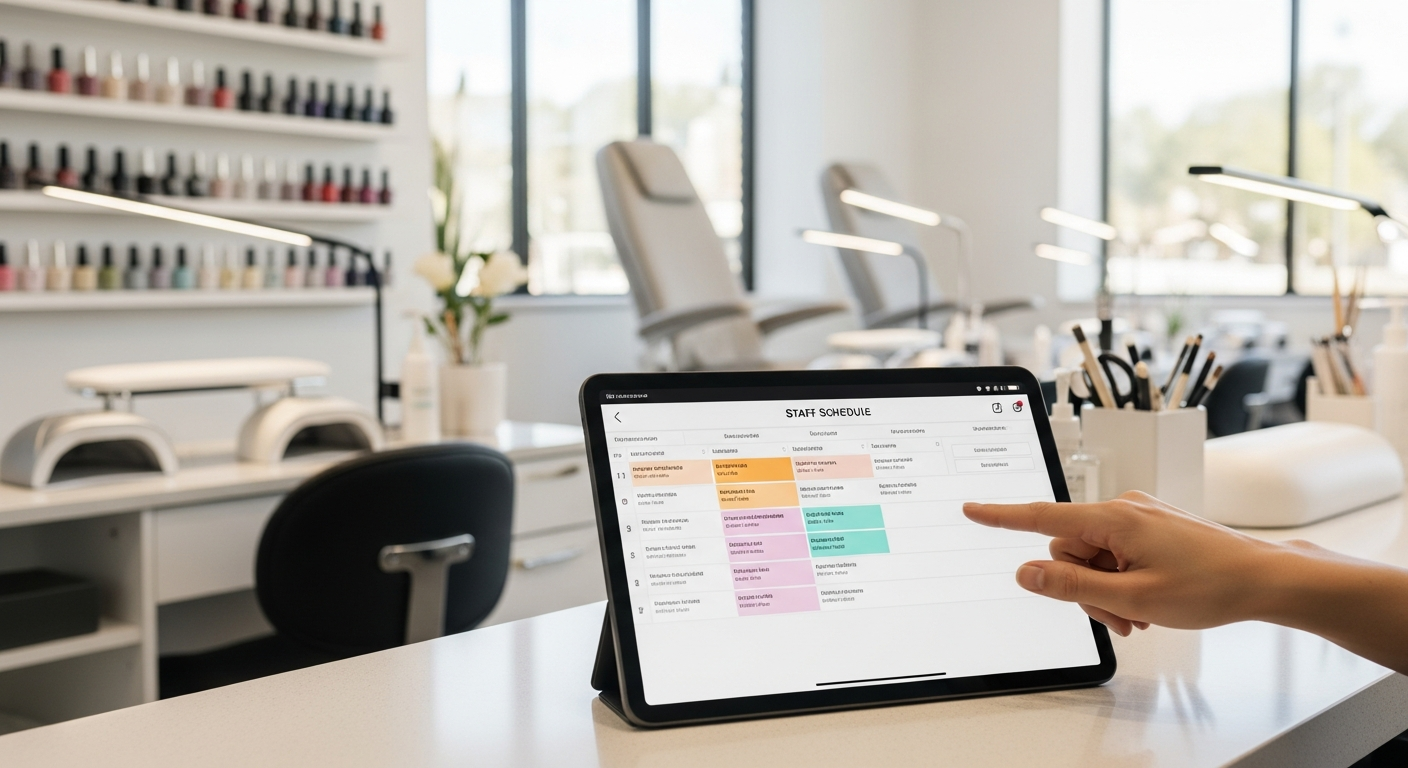
Manual scheduling often leads to double-booking or understaffing during peak weekend hours. Automated scheduling systems manage shift rotations based on pre-set availability and salon capacity.
Staff members can view their upcoming shifts on their own devices, reducing the need for phone calls or text threads. Automated notifications alert the team of any last-minute schedule changes.
This level of automation also manages shift swaps and time-off requests within defined rules. It ensures the salon always has the right number of technicians available to meet demand.
Automating Payroll and Tip Calculations
Calculating weekly pay and distributing tips is a time-consuming manual process for many small nail salons. Automation simplifies this by syncing worked hours directly with service records.
Systems can automatically calculate commissions based on the services performed by each technician. This removes the need for manual tallying at the end of the day or week.
Tip distribution can also be automated at the concept level to ensure accuracy and transparency. This reduces disputes and ensures that staff are paid correctly for their labor.
Reducing Operational Errors Through Systems
Human error in a nail salon often leads to inventory shortages or missed maintenance tasks. Automated inventory tracking monitors the usage of gels, acrylics, and lacquers in real-time.
When supplies reach a certain threshold, the system can generate a restock alert. This prevents the salon from running out of essential products during a busy service window.
- Consistency: Every technician follows the same automated prep and cleanup steps.
- Accuracy: Digital logs prevent errors in timekeeping and service recording.
- Efficiency: Owners spend less time on paperwork and more time on quality control.
Focusing on these automated systems allows a nail salon to function as a predictable business. It shifts the reliance from individual memory to a reliable, repeatable operational framework.
