
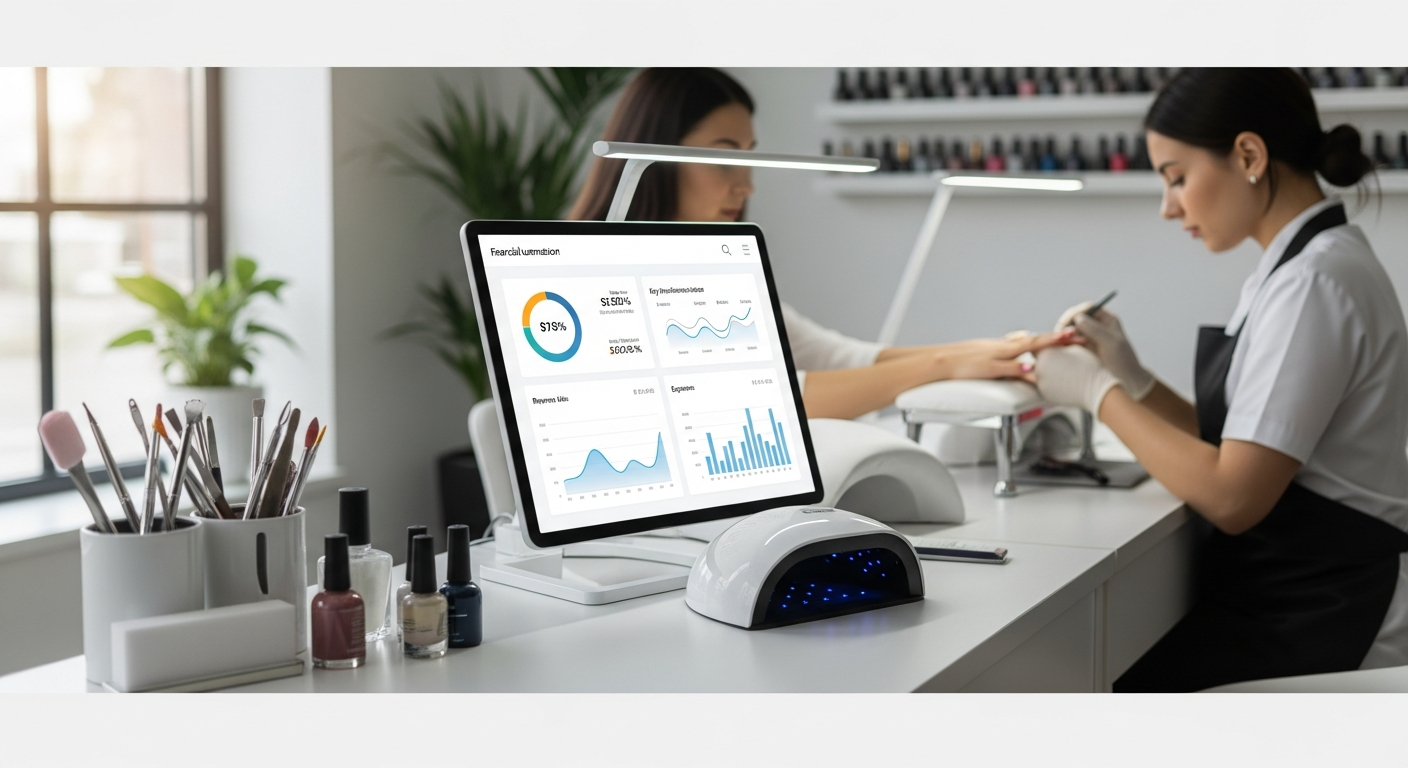
Nail Salon Financial Automation: A Guide for Owners
Nail salon financial automation is the use of digital systems to automatically track daily sales, supply costs, and labor expenses. By linking point-of-sale data with expense tracking, salon owners gain real-time visibility into their profit margins and service performance without needing manual spreadsheets or complex financial training.
Why Manual Bookkeeping Holds Your Salon Back
Most salon owners spend hours every week writing down daily totals from paper receipts or calculators. Manual tracking often leads to math errors and missing information about where money is actually going.
When you rely on manual entries, you only see your financial health at the end of the month. This delay makes it difficult to fix problems with high supply costs or slow service days immediately.
Automation moves this data into a digital dashboard instantly. You can see your total sales, tips, and technician payouts the moment a customer pays at the front desk.
The Core Pillars of Nail Salon Financial Automation
Automated Revenue and Sales Tracking
Every manicure, pedicure, and polish change generates data. Automation captures every transaction and categorizes it by service type and technician name automatically.
This system ensures that you know exactly which services are bringing in the most money. You no longer have to guess if acrylics or gel manicures are your primary revenue drivers.
Clear Visibility into Supply and Labor Costs
Supplies like polish, monomer, and sanitation tools are major expenses. Automated systems can track these costs against your total revenue to show your true profit margin.
Labor is usually the highest cost for a US nail salon. Automation calculates technician commissions and hourly pay based on real-time booking data, reducing errors in payroll.
Key Performance Indicators (KPIs) for Salon Owners
KPIs are simple numbers that tell you if your business is healthy. Automation tracks these essential metrics without you having to do the math:
- Average Ticket Value: The average amount a customer spends during one visit.
- Technician Productivity: How much revenue each chair generates during working hours.
- Client Retention Rate: How many customers return for a second or third appointment.
- Service Margin: The money left over from a service after paying for labor and supplies.
Using Performance Data for Smarter Decisions
Automated reporting provides clear summaries that show your busiest days and slowest hours. You can use this data to adjust your staffing levels so you aren’t paying for empty chairs.
Seeing your daily performance helps you identify if a specific service is costing too much in supplies. If your costs are rising, the data will show you exactly when and where it started.
Having total control over your numbers gives you peace of mind. You can focus on providing great service while the system handles the financial tracking in the background.
