
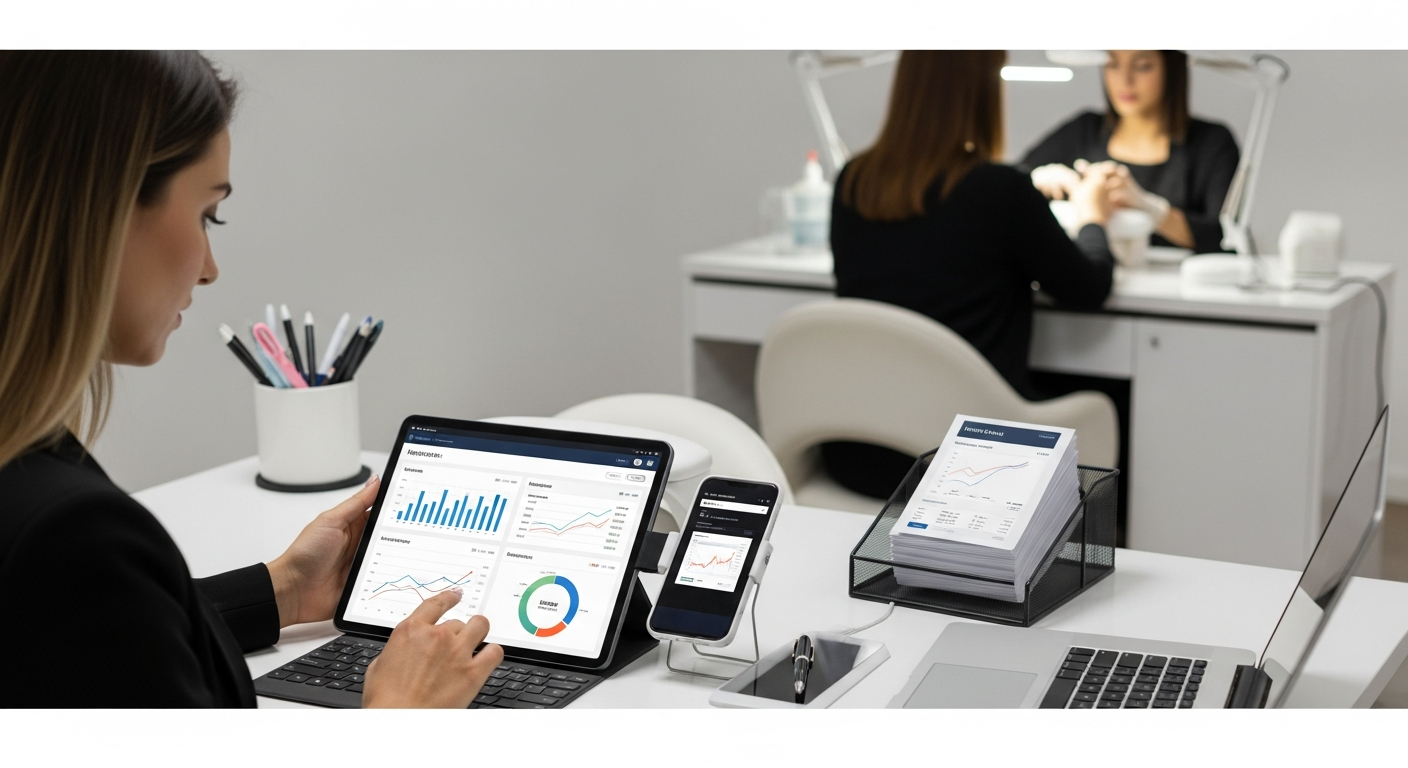
Simplifying Your Shop with Nail Salon Financial Automation
Nail salon financial automation refers to the use of technology to automatically record sales, track service costs, and monitor staff performance. These systems sync with your payment terminal to provide instant updates on your shop’s financial health, replacing manual spreadsheets with real-time data for better cash flow management.
Automating Your Daily Revenue Tracking
Most salon owners spend hours at the end of the week adding up paper receipts or manual logs. Financial automation pulls this data directly from your service checkout system.
This ensures every manicure, pedicure, and polish change is recorded the moment the customer pays. You no longer have to worry about math errors or missing entries in your ledger.
With automated revenue tracking, you can see your total sales for the day, week, or month with a single click. This gives you immediate clarity on how much money is actually coming in.
Gaining Visibility into Salon Expenses
Managing a nail salon involves many small costs that are easy to lose track of, such as back-bar supplies and retail inventory. Automation helps you see where your money is going.
By connecting your expense tracking to your financial system, you can categorize spending automatically. This helps you identify if you are spending too much on supplies relative to your sales.
Visibility is the key to control. When you can see your rent, utilities, and supply costs side-by-side with your revenue, you can stop guessing about your profit margins.
Understanding Performance Metrics (KPIs)
Key Performance Indicators, or KPIs, are simple numbers that tell you if your salon is healthy. Automation calculates these numbers for you without any manual effort.
- Average Ticket Price: The average amount each customer spends per visit.
- Rebooking Rate: How many clients book their next appointment before leaving.
- Chair Utilization: How much of the day your stations are actually making money.
Automated reporting turns these numbers into simple charts. Instead of looking at a list of names, you see a clear picture of which services are the most popular and profitable.
Using Performance Data to Make Better Decisions
When your financial data is automated, you can make decisions based on facts rather than feelings. This reduces the stress of running a local service business.
For example, if the data shows your mornings are consistently slow, you can create targeted promotions to fill those empty chairs. You will know exactly which hours need a boost.
Automation also helps you understand technician performance. You can see who is best at upselling nail art or who has the highest number of returning clients without hovering over them.
The Benefit of Real-Time Reporting
Traditional accounting often means waiting weeks to see how your business performed. Automated reporting provides that information instantly so you can act quickly.
If sales are down on a Tuesday, you know it by Tuesday evening. This allows you to adjust your spending or staffing immediately rather than waiting for an end-of-month report.
Consistent financial awareness leads to a more stable business. Automation handles the boring math so you can focus on providing great service and managing your team.
