
Nail Salon Operations Automation for Daily Efficiency
Nail salon operations automation is the use of digital systems to standardize daily workflows, manage staff shifts, and streamline administrative tasks. By automating recurring operational processes, nail salon owners reduce manual errors, ensure service consistency across all technicians, and create a predictable environment for both employees and clients.
Standardizing Daily Nail Salon Workflows
Daily operations in a nail salon involve repetitive tasks that are often missed when managed manually.
Automation allows owners to set digital checklists for opening and closing procedures.
These systems ensure that every station is prepped and every tool is sterilized before the first client arrives.
Automated workflow triggers can alert staff when specific maintenance tasks are due.
This reduces the mental load on the owner to remember every small operational detail.
Consistency is maintained regardless of which staff member is on the floor.
- Opening Checklists: Digital prompts for towel preparation and polish rack organization.
- Station Readiness: Automated reminders for technician sanitation protocols.
- Closing Procedures: Systemized logs for inventory counts and waste disposal.
Automating Staff Scheduling and Shift Coordination
Managing a team of nail technicians requires constant communication regarding shift availability.
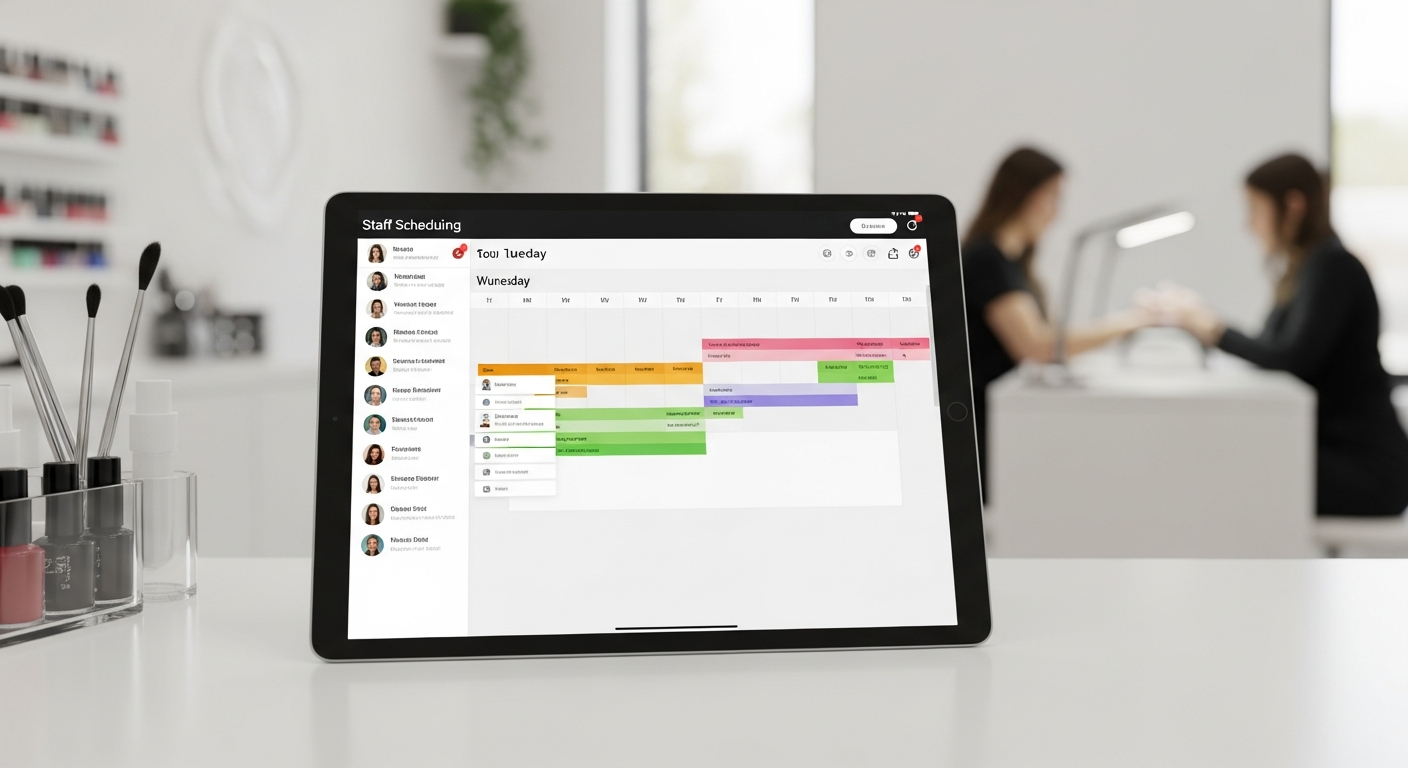
Nail salon operations automation replaces paper calendars with digital scheduling systems.
These tools allow staff to view their hours and request shift swaps without owner intervention.
Automated shift reminders reduce the likelihood of late arrivals or no-shows.
When a technician updates their availability, the system reflects the change across all platforms.
This ensures the salon is never understaffed during peak hours like weekends or holidays.
Improving Shift Transparency
Digital schedules provide technicians with clear expectations of their working hours.
Automated notifications inform the team of any last-minute changes to the daily roster.
This transparency builds trust and reduces friction within the salon team.
Streamlining Payroll and Tip Distribution
Calculating technician pay and tip splits is a complex daily task for many nail salon owners.
Operational automation tracks hours worked and services performed in real-time.
This data flows directly into a centralized system to simplify the payout process.
Automated tip tracking ensures that gratuities are calculated accurately for every service.
This removes the need for manual tallying at the end of a long shift.
Errors in payroll are significantly reduced, leading to more consistent financial management.
Digital SOPs for Consistent Service Quality
Standard Operating Procedures (SOPs) are the backbone of a successful nail salon.
Digitizing these procedures allows staff to access service protocols on a tablet or mobile device.
Automation ensures that every manicure or pedicure follows the same steps for every client.
When SOPs are automated, the owner no longer needs to be physically present to monitor quality.
Systems can require staff to “check off” steps during specialized nail treatments.
This level of systemization protects the reputation of the salon and ensures client satisfaction.
Reducing Operational Errors through Systemization
Manual data entry is the primary cause of operational errors in small nail salons.
Automating the flow of information between scheduling and inventory reduces these mistakes.
When a service is completed, the system automatically adjusts the operational logs.
Systemization provides the owner with clear reports on salon performance without manual counting.
Owners can identify which operational areas are slow or where supplies are being wasted.
Data-driven decisions replace guesswork in the daily management of the business.
- Error Reduction: Eliminates double-entry of service data and staff hours.
- Supply Tracking: Automated alerts when back-bar products reach low levels.
- Accountability: Digital footprints for every operational task performed by staff.
