
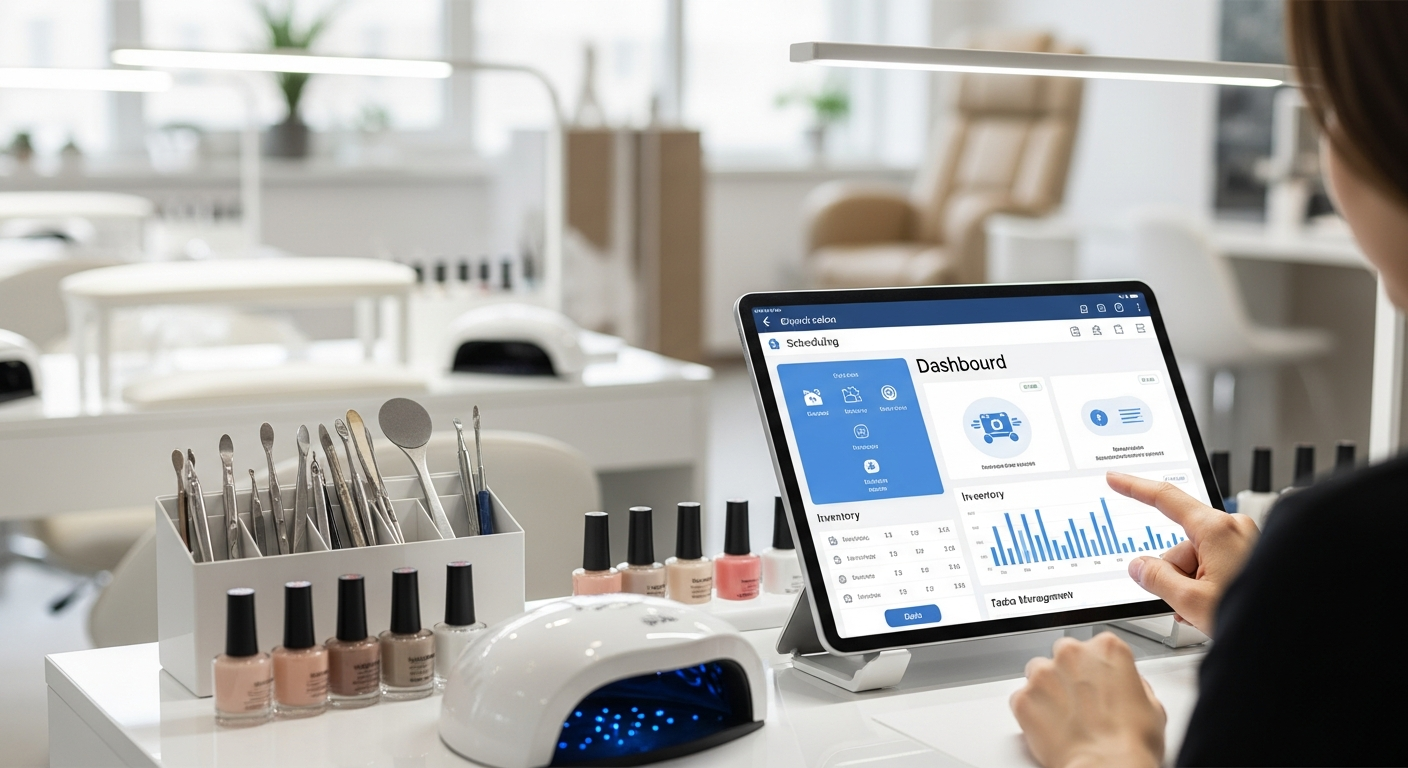
Nail Salon Operations Automation Guide
Nail salon operations automation is the implementation of digital systems to manage daily workflows, staff scheduling, and procedural consistency within a nail business. These systems replace manual tasks with standardized digital processes, ensuring service quality remains uniform while reducing operational errors and administrative burdens for nail salon owners.
Standardizing Daily Workflows with Automation
Manual checklists for opening and closing are often overlooked in a busy nail salon.
Automation digitizes these essential tasks, ensuring that every station is prepared and sanitized.
Technicians receive automated alerts to complete specific prep work before the first client arrives.
Digital systems track the completion of sanitation protocols for pedicure bowls and manicure tools.
By moving these workflows to a central system, owners can verify completion remotely.
This consistency protects the salon license and ensures every customer receives the same experience.
Automated Station Readiness
Automation allows owners to set digital triggers for station maintenance and inventory checks.
When a technician finishes a service, the system prompts a quick cleanup checklist.
This prevents the clutter that often accumulates during peak weekend hours.
Automating Staff Scheduling and Shift Coordination
Managing technician shifts using paper calendars or text messages often leads to double-booking.
Nail salon operations automation synchronizes staff availability with the daily service floor.
Technicians can view their assigned shifts and station rotations through a mobile interface.
Automated systems handle shift swap requests based on pre-set salon rules.
If a technician needs to leave early, the system automatically adjusts the floor coverage.
This eliminates the need for the owner to manually mediate every scheduling change.
Managing Walk-in and Appointment Flow
Automation balances the flow between scheduled appointments and walk-in manicure clients.
The system assigns technicians based on their current status and expertise levels.
This prevents overworking specific staff members while others remain idle at their stations.
Streamlining Payroll and Tip Distribution Processes
Manually calculating daily tips and commission splits is a common source of operational error.
Automation captures every service add-on and polish change at the moment of checkout.
The system then attributes these earnings to the correct technician’s digital profile.
By automating the data collection for payroll, owners save hours of administrative work each week.
The system tracks total hours worked and service commissions without manual data entry.
This transparency builds trust with staff and ensures everyone is paid accurately for their labor.
Reducing Operational Errors Through Systems
Inconsistent service steps can lead to poor nail retention and unhappy clients.
Automated Standard Operating Procedures (SOPs) provide technicians with clear, digital guides.
Whether performing a gel fill or a dip powder service, the steps remain the same.
Systems also reduce errors in supply management by tracking product usage per service.
When a technician logs a specific treatment, the system updates the back-bar inventory levels.
This prevents the salon from running out of essential items like monomer or top coat.
Improving Accuracy in Service Timing
Automation tracks the actual time taken for different types of nail services.
If a full set consistently takes longer than estimated, the system adjusts the operational buffer.
This prevents the “domino effect” where one late appointment ruins the entire daily schedule.
