
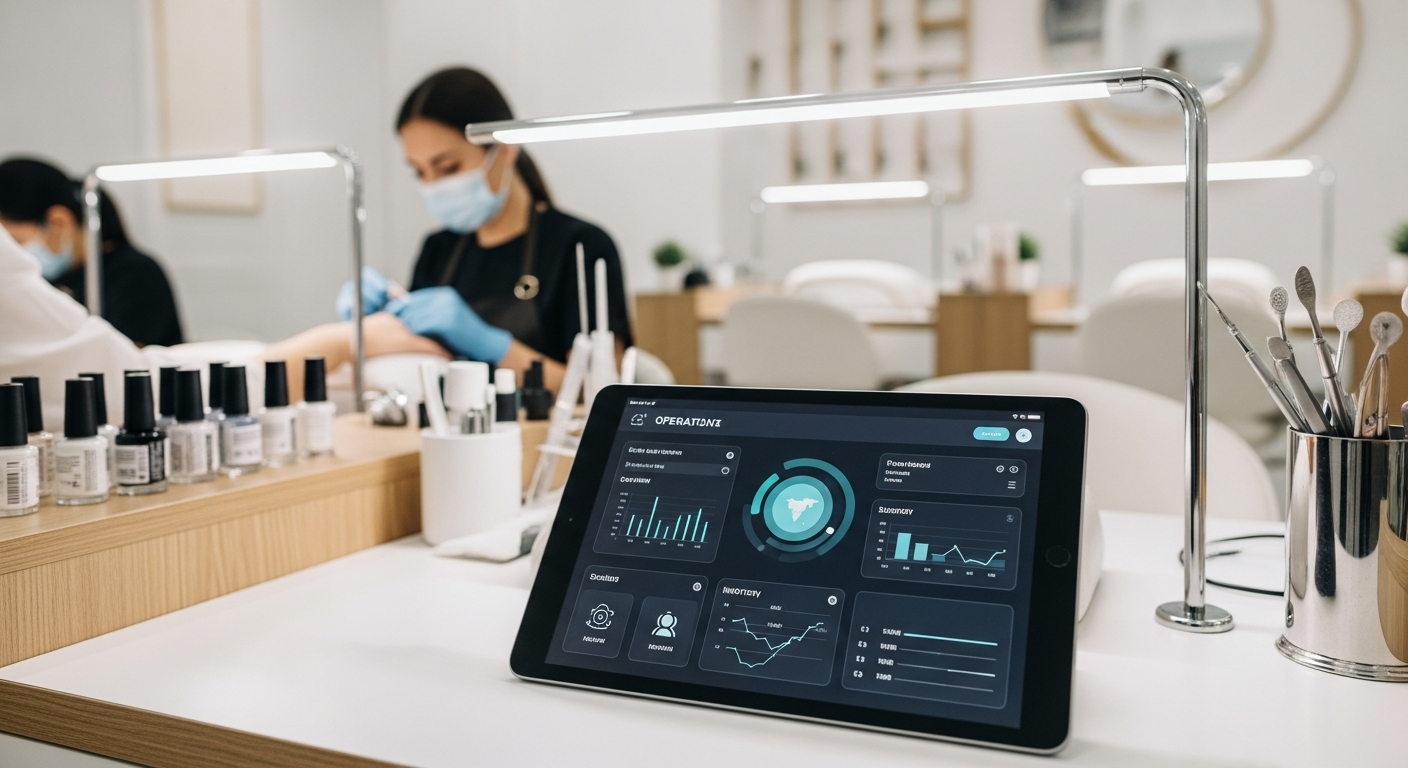
Nail Salon Operations Automation: Streamlining Daily Workflows
Nail salon operations automation is the use of digital systems to standardize daily workflows, manage staff schedules, and streamline back-office tasks like payroll calculation. These systems replace manual tracking with automated triggers, ensuring consistent service delivery and operational accuracy without constant owner supervision or manual intervention.
Standardizing Workflows with Digital SOPs
Standard Operating Procedures (SOPs) are the backbone of a successful nail salon. By automating these workflows, you ensure every technician follows the same steps for station preparation and sanitation.
Digital checklists can trigger notifications at specific times of the day. This ensures that opening and closing duties are completed without the owner needing to be physically present at the salon.
Workflow automation reduces the mental load on staff. When a system guides the technician through the required steps, service consistency improves regardless of which staff member is working.
Automating Staff Scheduling and Shift Coordination
Manual scheduling often leads to double-booking or understaffing during peak hours. Automation tools use historical data to predict busy times and suggest optimal staffing levels for the week.
These systems allow nail technicians to view their shifts and request changes through a centralized interface. Automated approvals can be set based on pre-defined rules, saving hours of administrative work.
- Eliminate paper schedules and messy group texts.
- Ensure adequate coverage for walk-ins and appointments.
- Reduce conflicts through transparent, rule-based shift assignments.
Streamlining Payroll and Tip Distribution Logic
Calculating pay for nail technicians involves complex variables like commission splits and daily tips. Automation simplifies this by syncing service data directly with payroll logic.
Automated systems track every service completed at each manicure station or pedicure chair. This data flows into a central dashboard that calculates total earnings, including hourly rates and commissions.
Tip automation ensures that credit card tips are accurately attributed to the correct technician. This reduces mathematical errors and builds trust between the salon owner and the staff.
Reducing Operational Errors with Automated Systems
Operational errors, such as missed cleaning cycles or inventory shortages, can hurt a salon’s reputation. Automated alerts notify management when specific operational milestones are not met.
For example, sensors or digital logs can track the usage of sterilization equipment. If a cycle is missed, the system sends an immediate alert to ensure the salon remains compliant with health standards.
Improving Station Turnover Consistency
Automating the timing between appointments helps manage station turnover. The system can signal when a station needs to be cleared and sanitized for the next client.
This level of process automation ensures that the salon floor remains organized. It prevents technicians from feeling rushed and ensures a high-quality experience for every client.
Digital Inventory Triggers
Running out of essential supplies like monomer or gel polish can halt operations. Automated inventory systems track usage based on the services performed each day.
When stock levels hit a certain threshold, the system can automatically generate a reorder list. This prevents service interruptions and maintains a steady flow of daily operations.
