
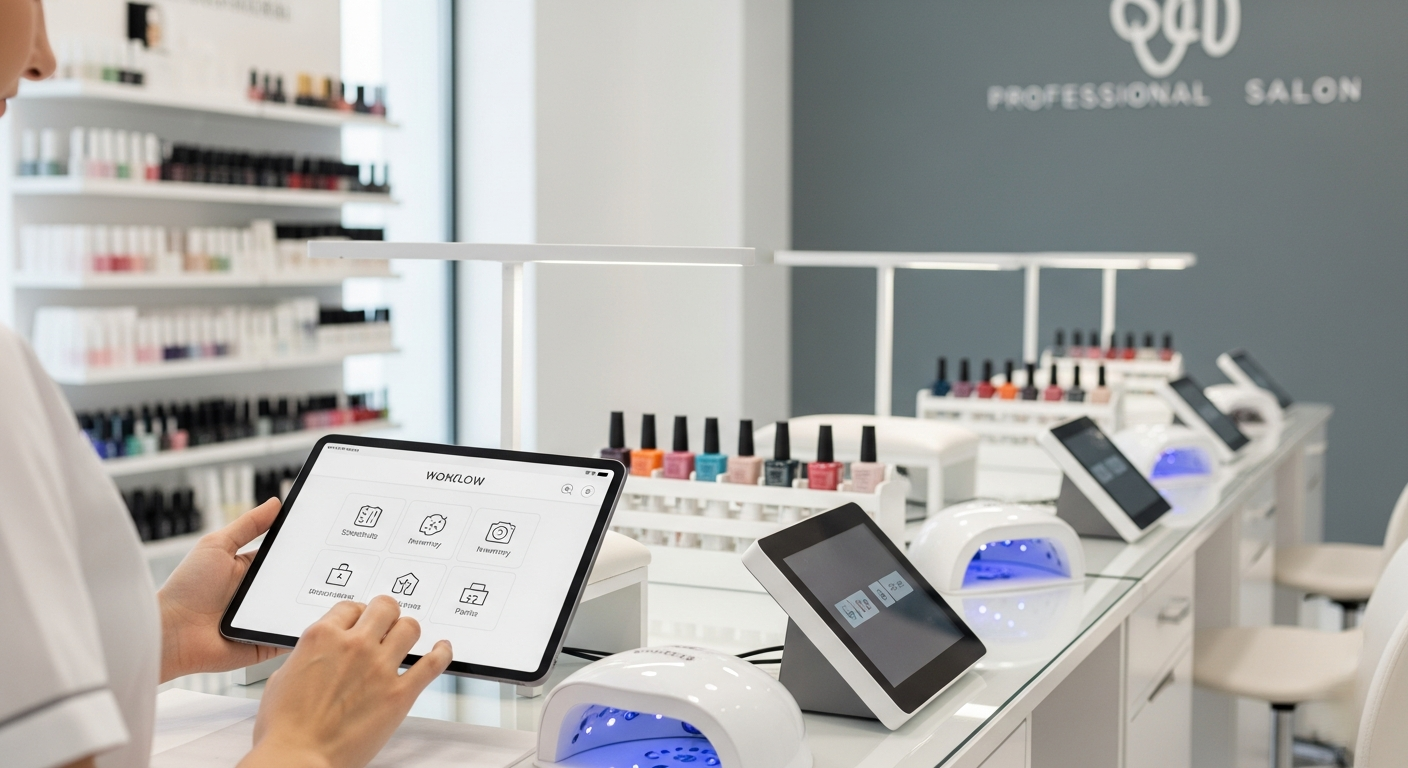
Streamlining Daily Workflows with Nail Salon Operations Automation
Nail salon operations automation is the use of digital systems to standardize and manage internal daily tasks, such as staff scheduling, payroll calculation, and opening procedures. By automating these repetitive administrative workflows, nail salon owners can ensure operational consistency, reduce manual entry errors, and maintain high service standards across every technician’s shift.
Automating Daily Opening and Closing Procedures
Daily nail salon operations often suffer from inconsistencies when technicians follow different opening or closing routines.
Automated workflow systems provide digital checklists that require staff to confirm completion of station sanitation and inventory prep.
These systems ensure that every pedicure chair is disinfected and every manicure station is stocked before the first client arrives.
Standardizing Service Workflows Through Digital SOPs
Standard Operating Procedures (SOPs) are the backbone of a successful nail salon but are often ignored when kept in paper manuals.
Operational automation integrates these steps into the daily workflow, prompting technicians to follow specific protocols for every service.
This process ensures that whether a client receives a gel manicure or an acrylic set, the quality remains identical regardless of the staff member.
Maintaining Consistency Across All Stations
Automated prompts help technicians remember specific salon standards, such as massage duration or cuticle care steps.
Consistency reduces client complaints and ensures the salon brand is protected through standardized service delivery.
Automating Staff Scheduling and Shift Rotations
Managing a rotating roster of nail technicians manually often leads to double-booking or understaffing during peak hours.
Automated scheduling systems use historical data to predict busy periods and suggest optimal staffing levels for the week.
Technicians can view their shifts and request time off through a central system, removing the need for manual text threads.
Streamlining Tip Allocation and Payroll Processing
Calculating daily tips and total hours for multiple nail technicians is a time-consuming task prone to human error.
Automation tracks every transaction and automatically assigns tips to the specific technician who performed the service.
At the end of the pay period, the system generates total earnings reports, simplifying the payroll process for the owner.
Reducing Manual Accounting Errors
Digital tracking eliminates the “shoebox” method of keeping receipts and handwritten logs of services performed.
Automated systems provide clear records that help owners reconcile daily cash flow with the services logged in the system.
Minimizing Operational Risks with Automated Systems
Operational errors, such as forgetting to reorder essential liquids or powders, can halt nail salon production.
Automation monitors usage patterns and alerts the owner when supplies reach a critical level, preventing service interruptions.
By removing the reliance on memory, the nail salon functions as a reliable system that operates smoothly every day.
